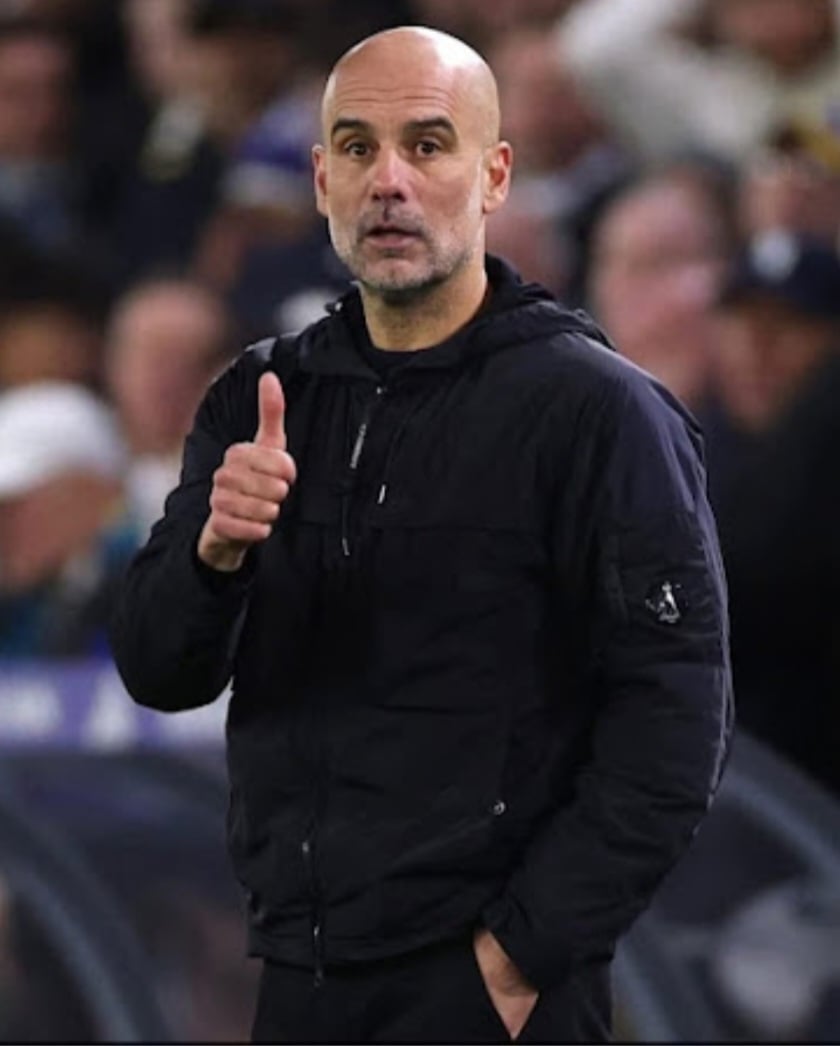
The Guardiola Pattern Why First-Leg Defeats Often Became Fatal in Europe !?
Can a coach be too intelligent for his own team?
Pep Guardiola has transformed modern football and is widely regarded as one of the greatest managers in history. Yet, throughout his Champions League career, one recurring pattern repeatedly attracted attention.
Whenever his team suffered a disappointing first-leg result—or when the biggest European nights arrived—Guardiola occasionally moved away from the tactical formula that had brought his team success throughout the season.
Was innovation always an advantage... or did it sometimes become his greatest weakness?
Even the greatest coaches develop recurring patterns — and one of the most fascinating patterns in Pep Guardiola’s European career is how difficult comeback scenarios often became after losing the first leg of a knockout tie. For many football fans and analysts, Pep Guardiola is regarded as one of the greatest coaches in football history. Yet, one recurring pattern in his European journey — particularly before Manchester City’s Champions League triumph — deserves closer attention . When Guardiola’s teams lost the first leg of a Champions League knockout tie, they often struggled to recover in the second leg. Looking back at Manchester City’s European exits before their eventual title win, a clear pattern seems to emerge. Defeats against teams such as Lyon, Tottenham Hotspur, Liverpool, and even earlier disappointments often followed a similar storyline : A poor first-leg result frequently became extremely difficult to overturn . Even in more recent seasons, this challenge appeared again. Once momentum shifted against Guardiola’s side after an initial setback, recovery often became more complicated than expected for a coach of his level , But why? From my perspective, part of the answer lies in Guardiola’s tendency — particularly in major European knockout matches — to make unexpected tactical adjustments compared to what had worked consistently throughout the season . For example, Manchester City could spend months successfully operating within a familiar structure, only for Guardiola to introduce significant tactical modifications in decisive Champions League matches . At times, these adjustments seemed designed to create more defensive balance or midfield security. However, they occasionally came at the expense of the attacking rhythm and chemistry that had defined the team throughout the season. This pattern appeared in several European exits, where City sometimes looked less familiar with their own structure during the most important matches of the campaign. A striking example came in the 2021 UEFA Champions League Final against Chelsea . Throughout most of the season, City had relied heavily on the balance provided by defensive midfielders such as Rodri or Fernandinho. Yet, in arguably the biggest match of the season, Guardiola surprisingly moved away from that structure. The absence of a natural holding midfielder disrupted the team’s balance. In addition, deploying players in unfamiliar tactical roles reduced some of City’s greatest strengths . For example, asking a player like Kevin De Bruyne — one of the world’s best creators — to operate in a role that distanced him from his natural influence on the game limited City’s attacking fluidity. Similarly, certain selection decisions raised questions about rhythm, match sharpness, and tactical cohesion . This doesn't diminish Guardiola’s greatness. In fact, his eventual Champions League success with Manchester City showed his ability to evolve and adapt. However, even elite coaches can sometimes become vulnerable to their own convictions — especially when the temptation to reinvent solutions arrives during football’s biggest nights. Sometimes, football’s biggest defeats are not caused by a lack of quality — but by moving away from the very ideas that made a team successful in the first place .
Conclusion :
Pep Guardiola's legacy is beyond debate. His influence on modern football has changed the game forever, and his eventual Champions League triumph with Manchester City proved his remarkable ability to learn, adapt, and evolve. Yet, his European journey also offers an important tactical lesson.
Football's biggest matches are not always won by creating something new. More often, they are decided by trusting the principles, balance, and relationships that have already been built over an entire season.
Sometimes, the greatest tactical decision is not to surprise your opponent... It's to trust the ideas that made your team great in the first place.