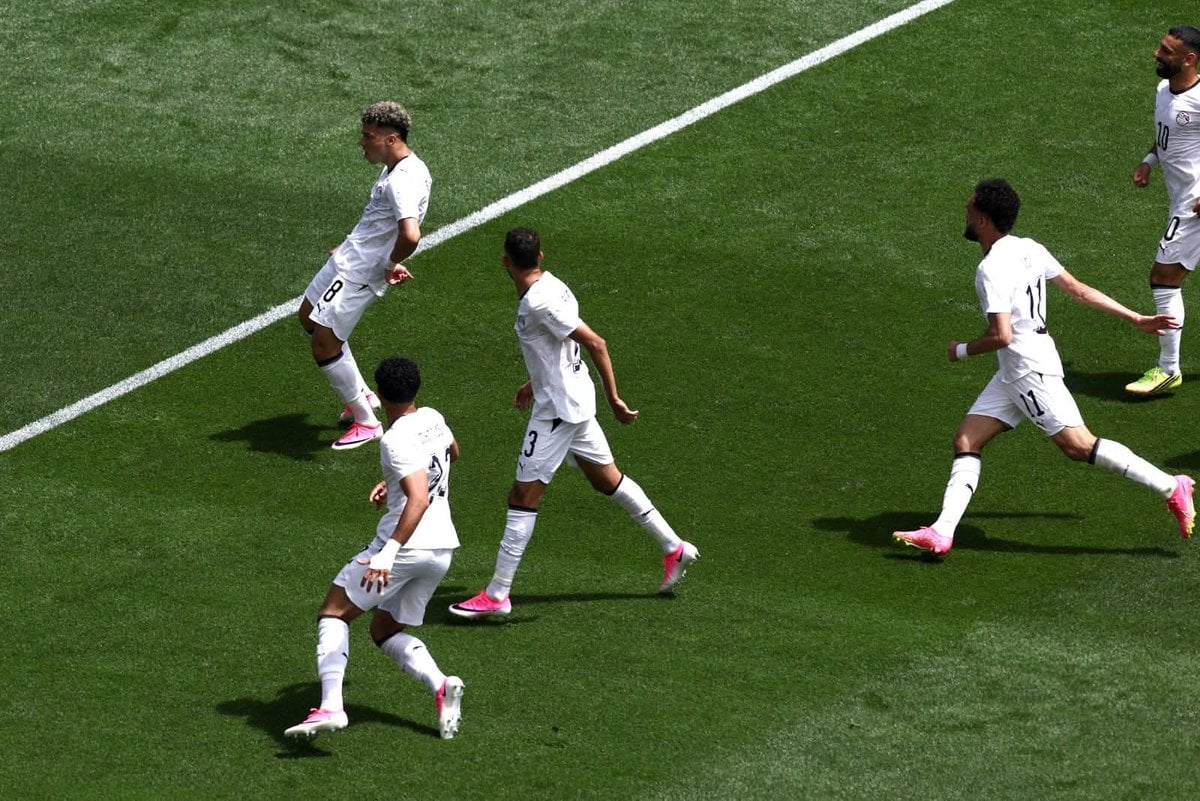
Can Egypt Break New Ground in World Cup 2026? A Tactical Preview
Egypt are set to appear at the FIFA World Cup for the fourth time in their history, hoping to make a stronger impact this time. Drawn in Group G with Belgium, Iran, and New Zealand, the team faces a mixed level of opposition as they aim to go beyond the group stage for the first time. Before that, however, Egypt will be focused on a key goal: winning their first ever World Cup match.
This article looks at Egypt’s preparation through three friendly games against Saudi Arabia, Spain, and Brazil. These matches offer a good chance to understand the team’s tactical ideas against different types of opponents. The analysis will focus on their main strengths and weaknesses, both in and out of possession, and how they perform in different phases of the game.
Build Up phase
Against teams that press high in a man-to-man style, Hossam Hassan’s Egypt prefer to use the wide areas to play through the pressure. They look to overload the flanks and half-spaces, using quick one- and two-touch combinations to move around the opposition’s high block.
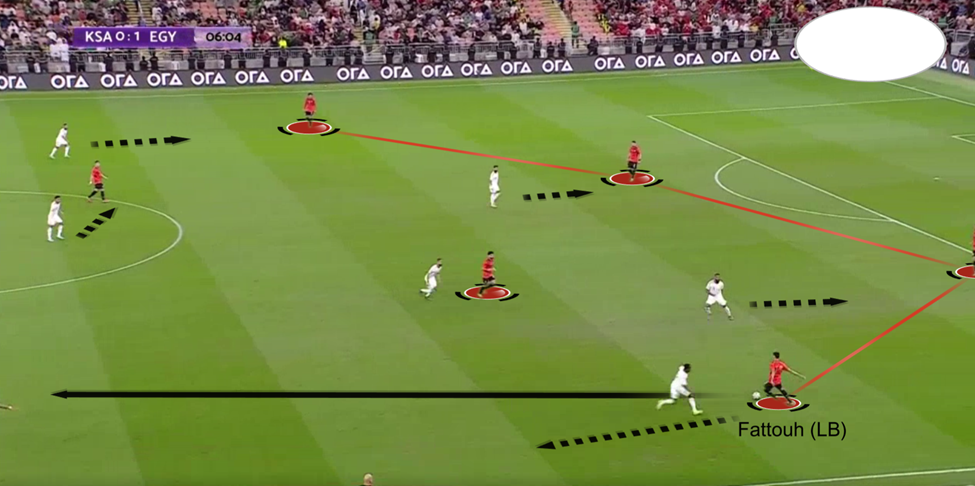
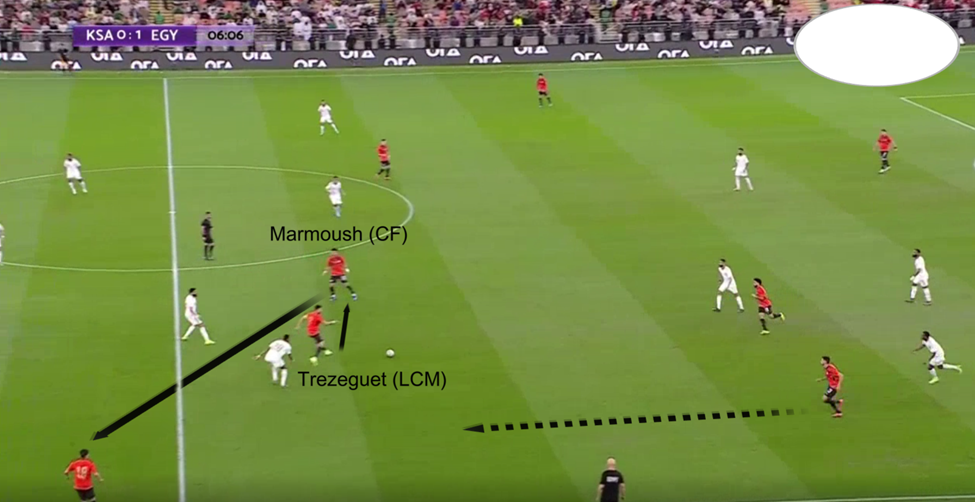
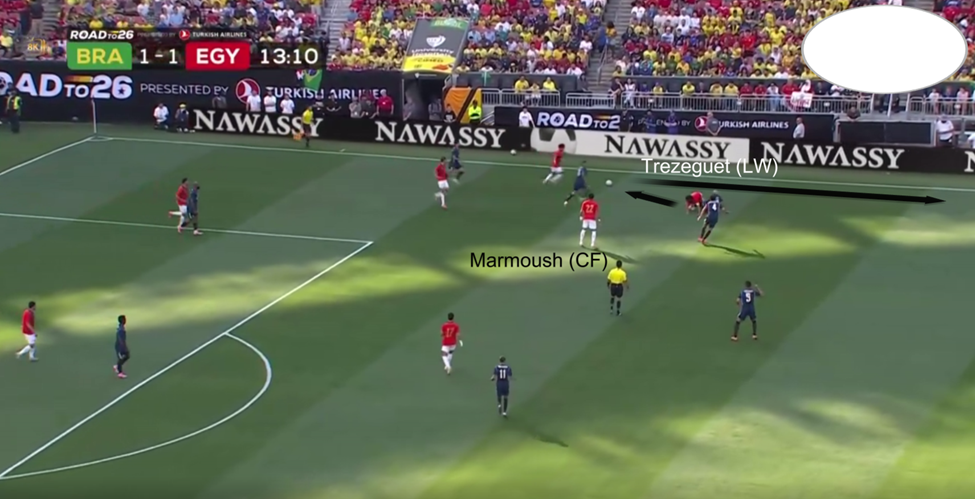
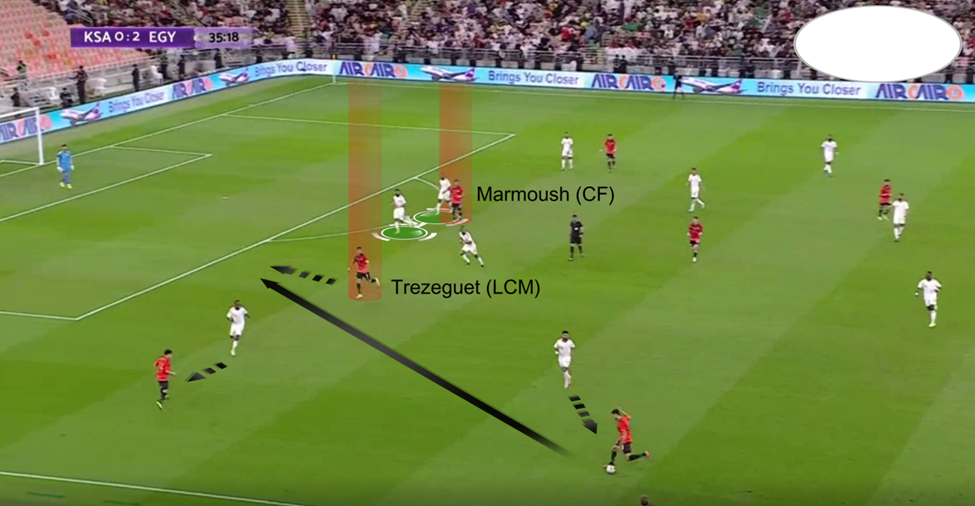
In this phase, Egypt often builds up in a 4+1 shape. Key roles come from Ahmed Fattouh at left-back, Mahmoud Trezeguet as the left central midfielder, and Omar Marmoush dropping from the front line. This movement helps create space out wide, where Egypt can find the free player through simple up-back-through combinations, while here Saudi Arabia central defenders are occupied and unable to shift across quickly.
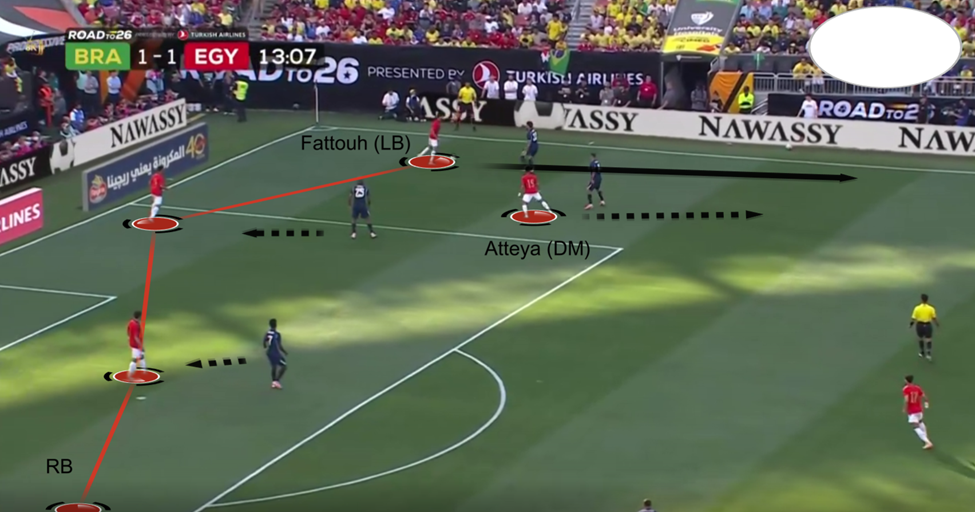
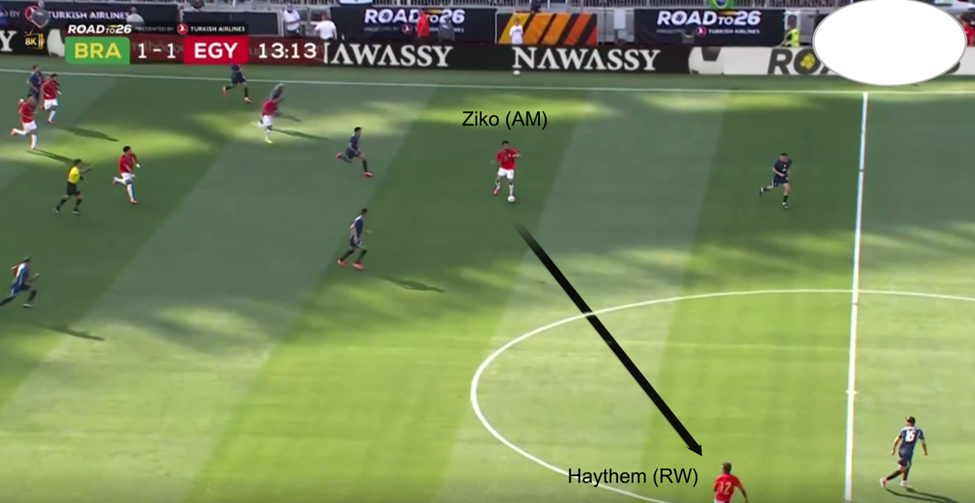
Using the same up-back-through combination against Brazil, Egypt could progress around the block. Marawan Atteya, operating as the number six, looks to find a progressive pass into Mostafa Ziko in the attacking midfield role. From there, Ziko can quickly switch the play towards Haithem Hassan on the right wing, creating a 2v2 situation near the midfield line and allowing Egypt to attack in a promising artificial transition.
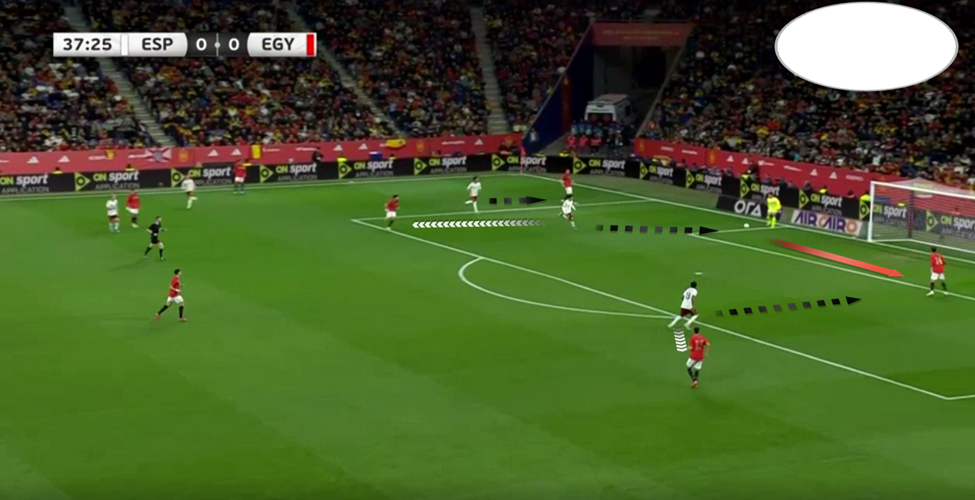
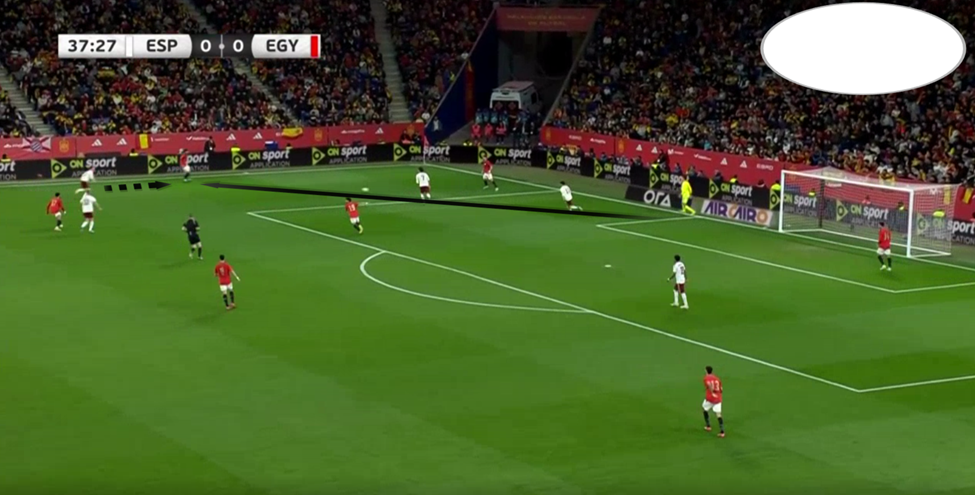
Using Mostafa Shobeir as the goalkeeper in build-up adds an extra level of control. He is comfortable on the ball and shows good composure under pressure. In this situation against Spain, they try to force Egypt’s build-up towards the left side and suffocate them there. However, Shobeir plays against the pressing direction, finding the Right back Mohammed Hany, who continues the sequence allowing Egypt to escape the pressure and continue the build-up cleanly.
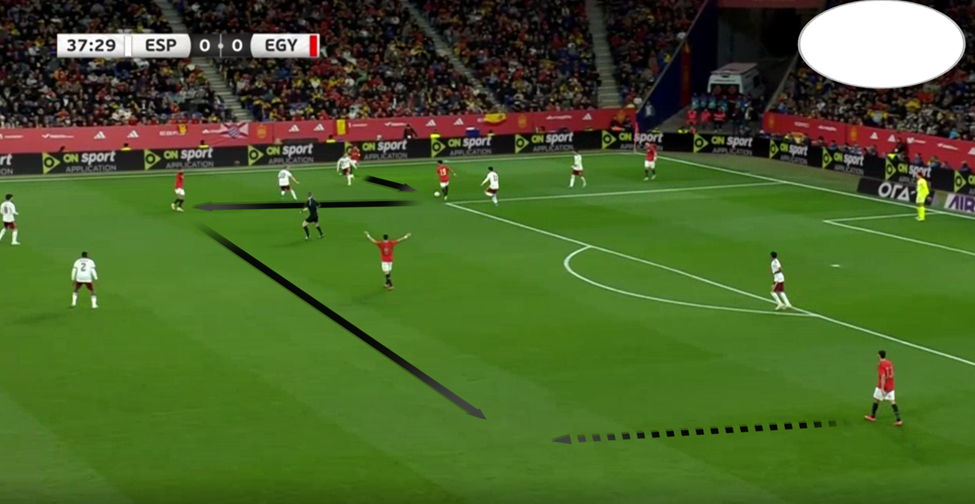
However, there are still some clear weaknesses in Egypt’s build-up. Yasser Ibrahim, playing as the right centre-back, is not as strong on the ball, which can make him a target for opposition pressing traps. Teams can focus their pressure on his side to force mistakes. At times, there are also simple passing errors during build-up, which can lead to dangerous high turnovers and put Egypt under immediate pressure.
Final Third possession & Chance creation phase
Egypt is not a possession-heavy team, so they do not spend long periods in the final third. One of the main reasons is the lack of a classic number nine. Players like Marmoush and Salah are often used in this role, while the only natural striker, Hamza Abd El Karim, is still very young and recently moved to Barcelona’s U19 team, which makes it unlikely for him to play a major role.
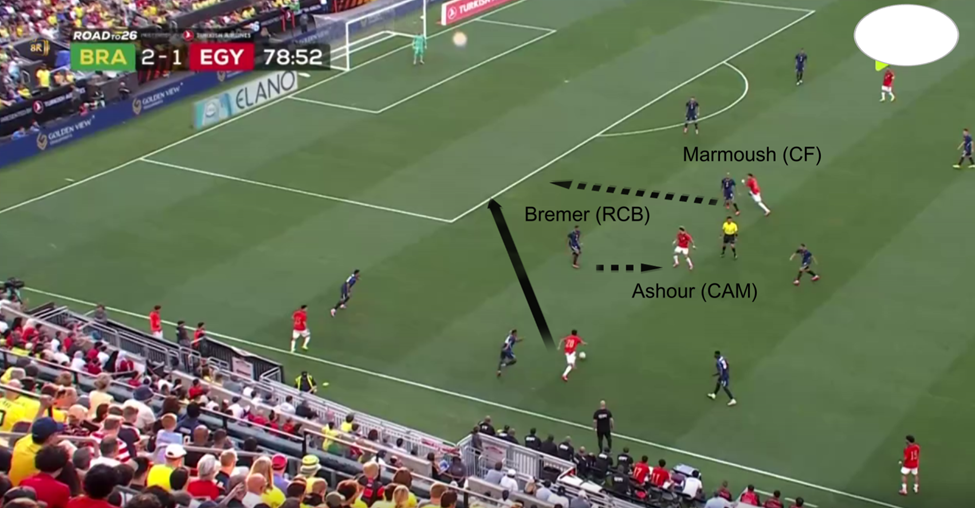
Egypt’s main idea is to use double width on the ball side. The full-back and winger work together to drag the opponent’s wide players the nearest possible to the touchline. At the same time, Marmoush tries to pin the Centre-backs in order to attack such interspaces by an attacking midfielder, or vice versa.
High Pressing phase
Out of possession, Egypt usually press in a man-to-man structure against the opponent’s build-up. However, the pressing is more passive than aggressive. They tend to wait and only step up when there are clear triggers rather than constantly applying pressure.
This approach can make it easier for opponents to stay comfortable on the ball, allowing them to move from the build-up phase into progression — and sometimes even into the final third — without facing strong disruption from Egypt’s press.
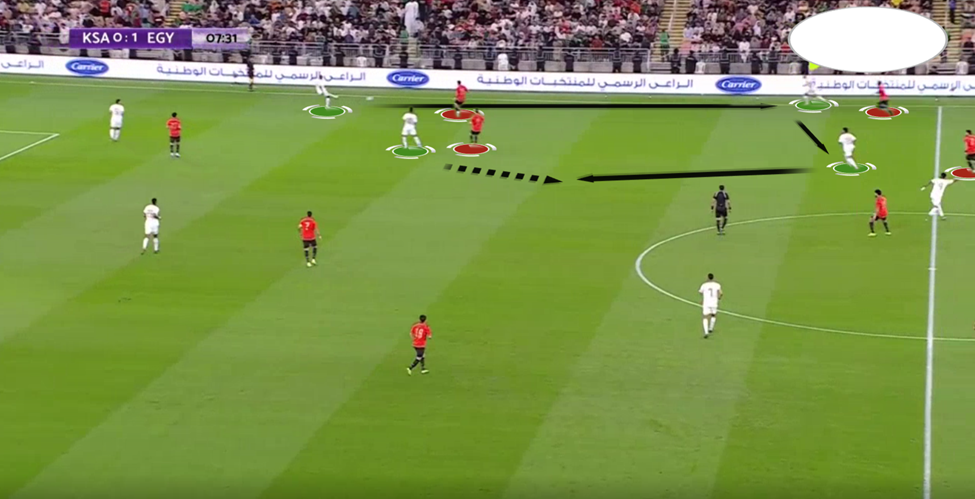
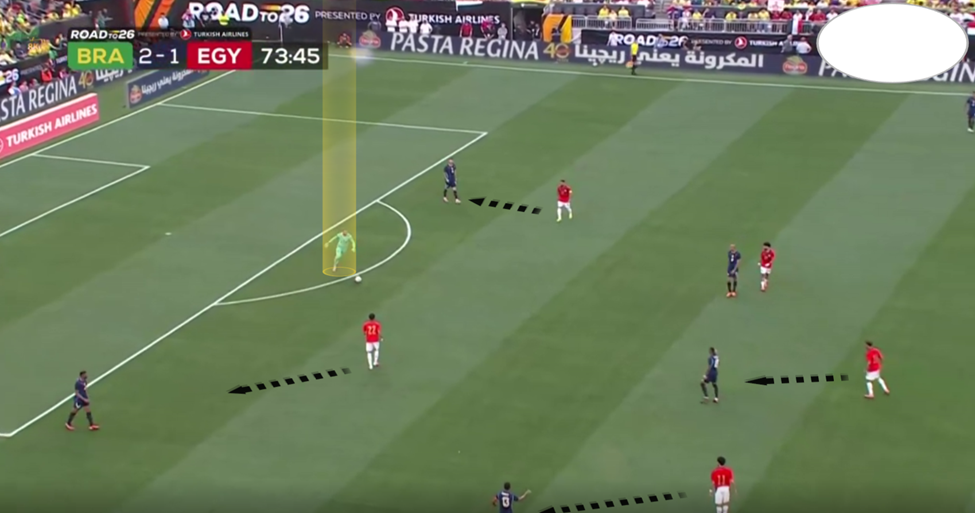
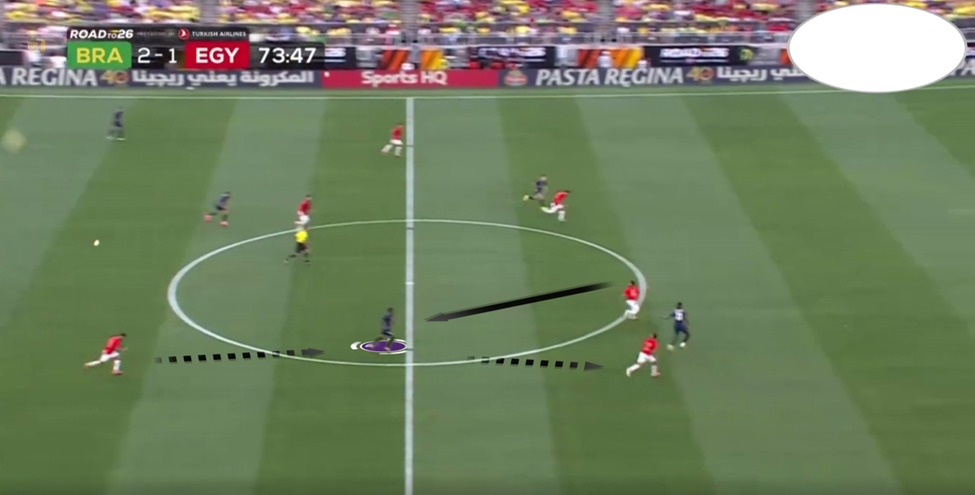
This man-to-man approach can also be exposed against direct long balls. Since the pressing is not aggressive enough, opponents often have time and space on the ball to play forward passes from the back.
When Egypt then drops to compete for the aerial duel, a gap can appear around the second ball dropping area, where a front line opponent player can drop slightly to win that second ball without pressure, and turn to face Egypt’s goal. This can quickly lead to a transition in equal numbers, which is a dangerous situation for Egypt to defend.
Mid-Block Phase
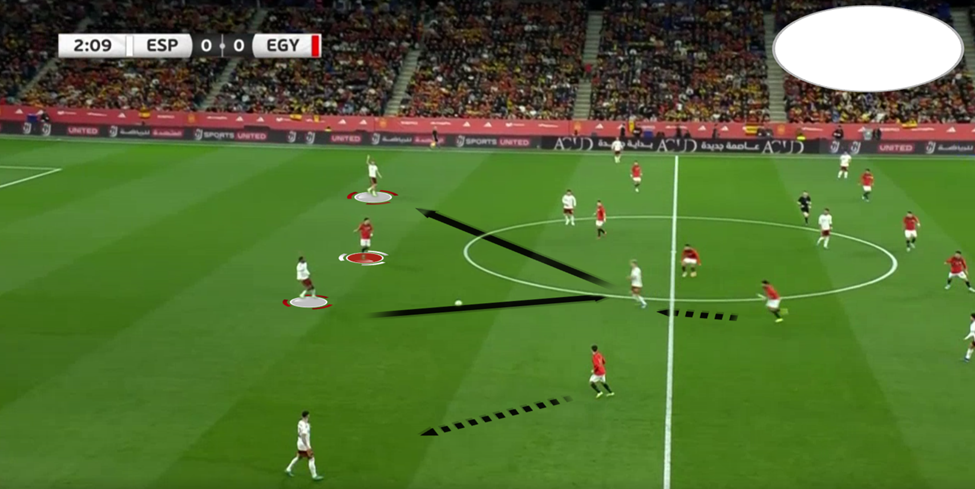
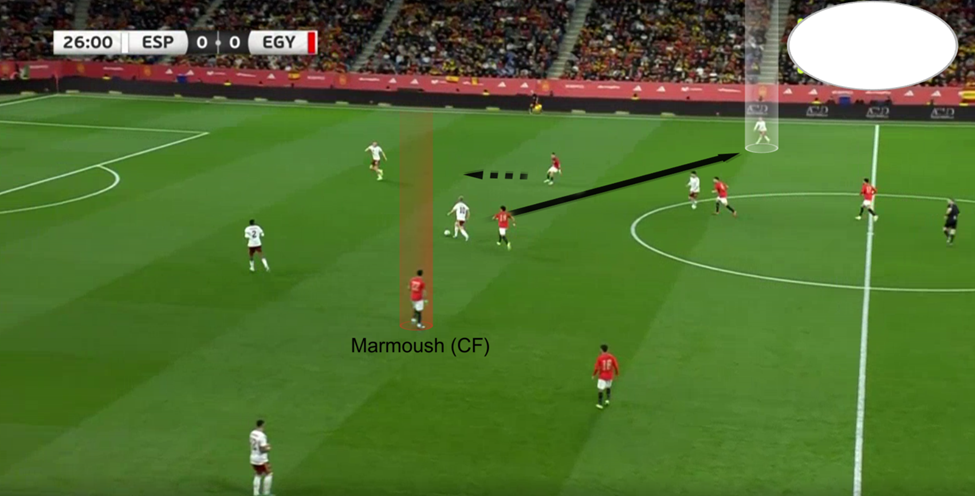
During Spain friendly, Egypt relied on a man-to-man approach in midfield while their wingers track the opponent’s full-backs. Moreover, Marmoush positions himself to block the passing lane between the opponent’s two centre-backs, this strategy aims for keeping a spare player in Egypt back line.
However, the fact that Marmoush is not applying pressure aggressively results in a weakness point. Opponents can use simple third-man combinations, playing into a dropping midfielder and then switching the ball to the far-side Centre-back with ease.
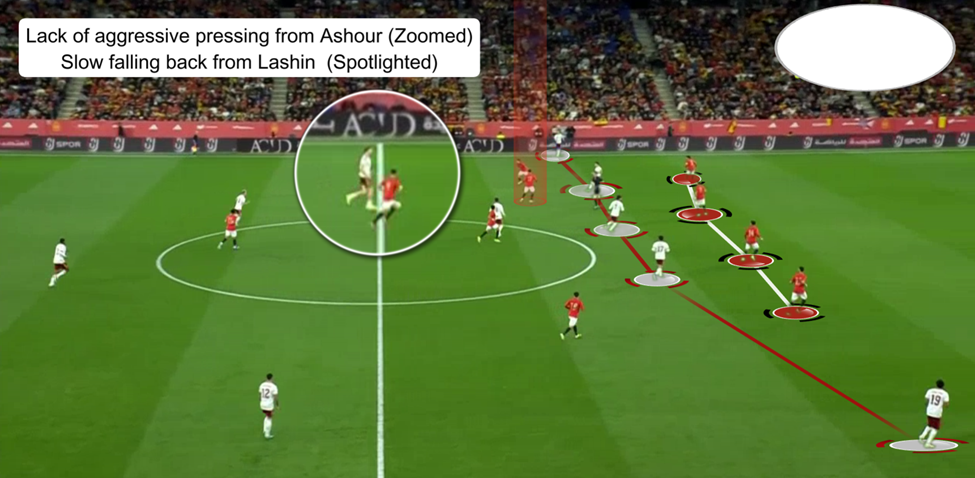
When this latter steps forward with the ball, Egypt’s reaction is often slow. The midfielders do not apply strong pressure, and tracking back is too slow. This can leave the back line exposed, facing equal number of opponent’s attacking players or even outnumbered.
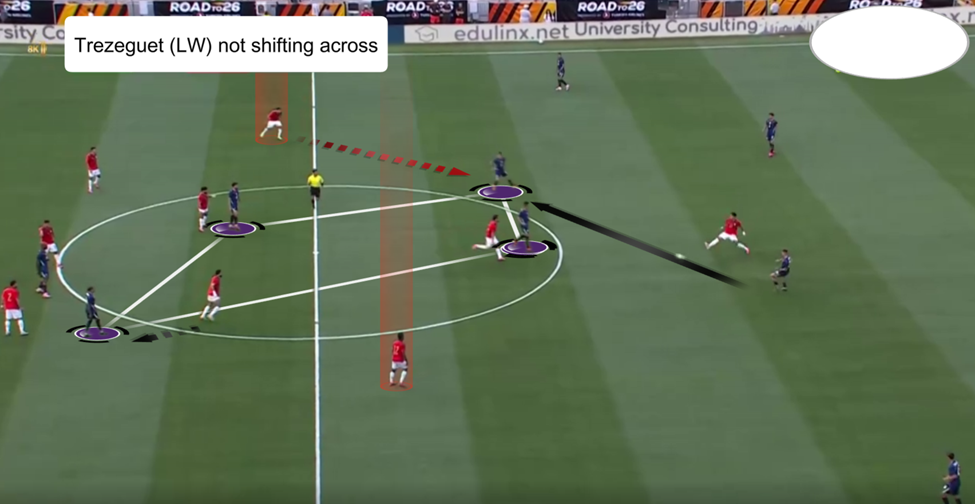
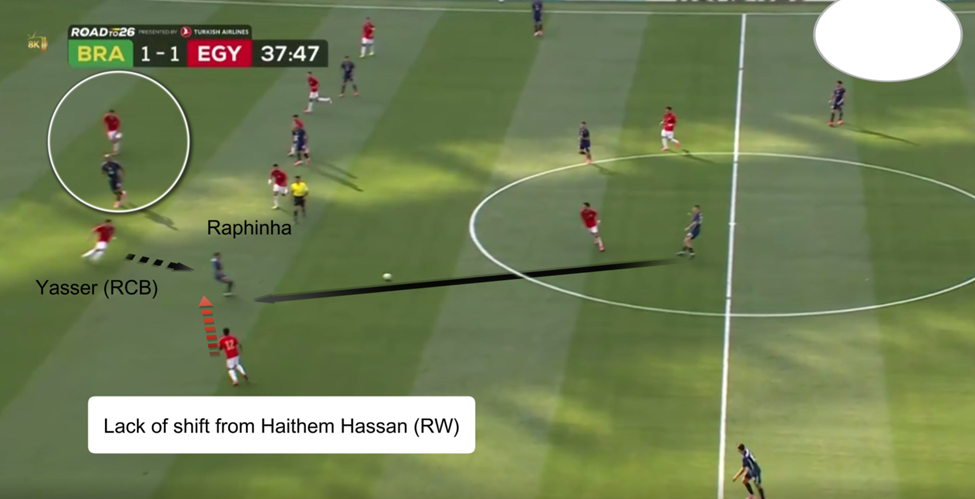
A more serious issue appeared in the match against Brazil. The Brazilians overloaded Egypt’s three central midfielders, with Raphinha dropping between the lines in a 3-box-3 structure.
At the same time, Egypt’s wingers focused on passively blocking inside passing lanes from the centre-backs, but they did not shift across with the ball as it moved. This lack of shifting movement made it easier for Brazil to circulate possession and find a free midfielder in space.
As a result, Brazilian players were often able to receive the ball without pressure in central areas and quickly release long passes towards the front line. This created dangerous situations, as Egypt’s defensive shape was not ready to deal with these forward runs.
Low block phase
Egypt looked defensively solid during AFCON, but against higher-level opponents like Spain and Brazil, some clear weaknesses appeared in their low block. The closer the opponent gets to goal, the more these issues become visible.
The results: (0-0) draw against Spain and a (2-1) loss to Brazil were largely influenced by last-second defensive actions and recovery efforts from the back line. Most importantly, goalkeeper Mostafa Shobeir played a key role, making crucial saves and dealing well with crosses to keep Egypt in the game.
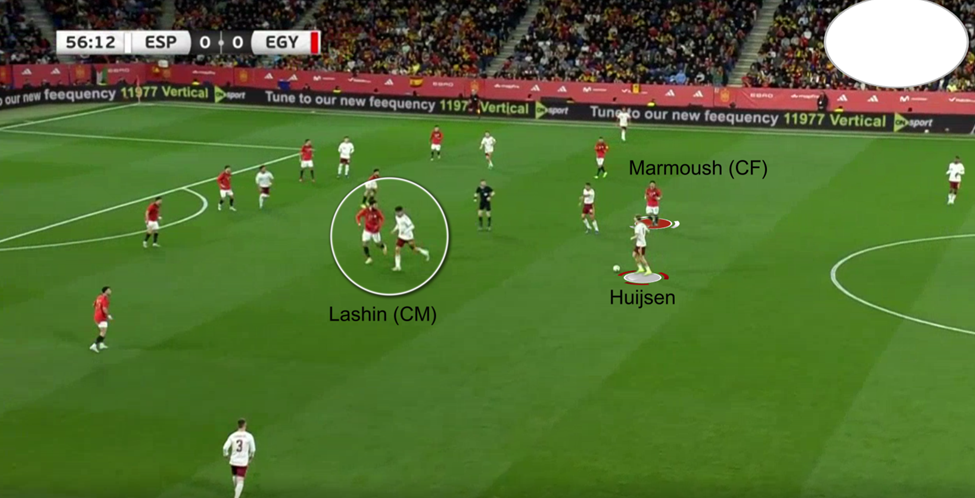
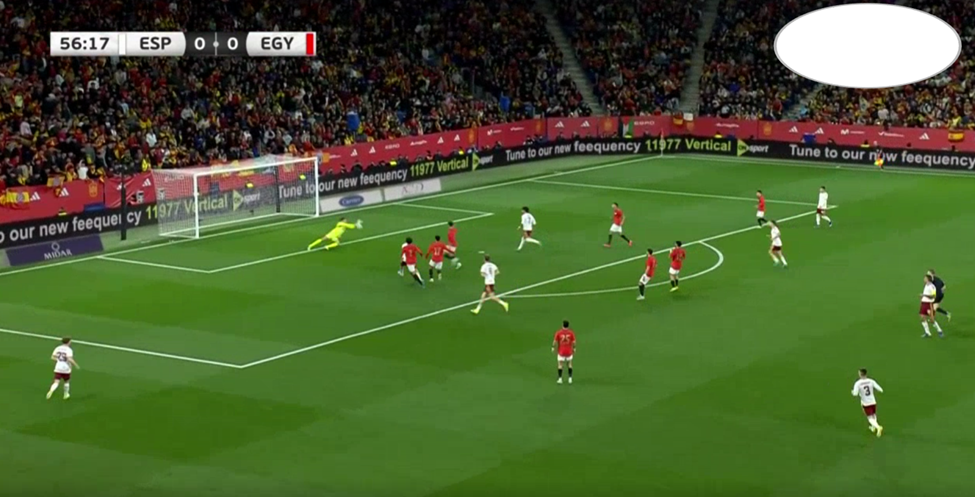
However, there were structural problems. In the Spain match, Marmoush again in this phase, did not apply pressure on Centre-backs; Dean Huijsen, could easily carry the ball forward while Mohannad Lashin, playing as one of the two pivots, was distracted as he was trying to follow Huijsen while still tracking his direct opponent. This created confusion and opened space centrally.
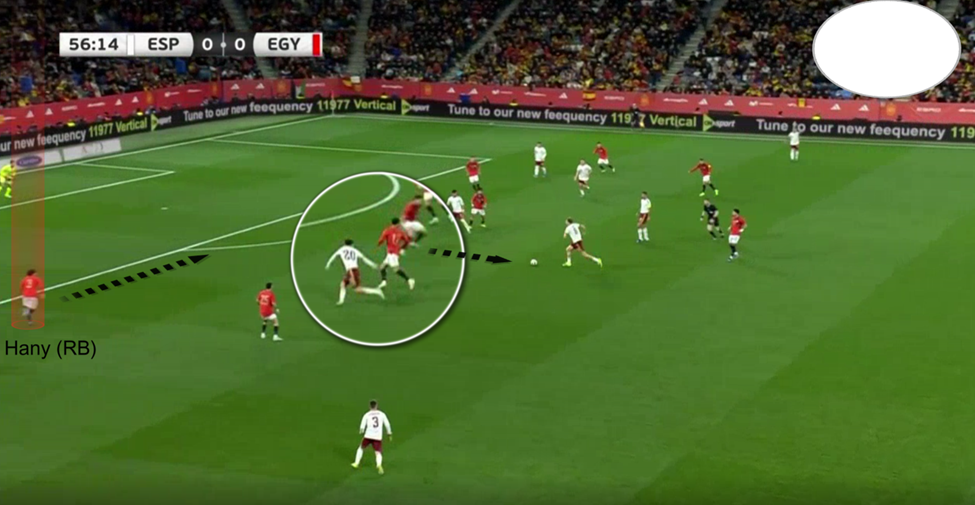
A similar issue affected Yasser Ibrahim, who also had to deal with multiple responsibilities in central defense. With slow covering movement from Mohamed Hany at right-back, the central spaces became exposed.
A similar issue appeared again against Brazil. As mentioned in the mid-block phase, Egypt’s wingers did not shift properly with the ball. In this situation, Haithem Hassan stayed away from Raphinha’s.
This forced Yasser Ibrahim to step out of the defensive line to press him, which left a large gap in central areas. As a result, Igor Thiago, Brazil’s Centre forward, was left in a 1v1 situation with Hamdy Fathy, Egypt Left Centre back in a big space.
Again, the right back Mohamed Hany did not shift to cover such a space, which made the defensive structure even weaker. This poor coordination allowed Brazil to create a dangerous attacking situation with very little resistance.
Egypt head into the 2026 World Cup for their fourth appearance with clear ambition, but also with important challenges in their overall structure.
Hossam Hassan, the head coach, brings strong personality and experience as a former legendary Egypt striker who played in the 1990 World Cup in Italy. His approach relies heavily on man management and team spirit, although some clear tactical issues remain visible, especially against higher-level opponents.
The team shows clear ideas in build-up, using wide overloads and quick combinations, but also has weaknesses under pressure and in defensive organization across different phases. Against stronger sides, problems appear more clearly in the mid-block and low-block, particularly in shifting, marking, and dealing with overloads or direct play.
Another challenge is that most of the squad plays in the domestic league, which makes the step up to World Cup level more demanding in terms of intensity and tactical discipline.
Key players to watch include goalkeeper Mostafa Shobeir, who has been crucial in keeping Egypt competitive, left-back Ahmed Fattouh for his role in build-up, and attacking midfielder Emam Ashour, who can be important in linking play and attacking spaces.
Overall, Egypt has a clear identity and fighting spirit, but their success in the tournament will depend on how well they manage their tactical weaknesses against stronger opposition.
More from Louai Hussein coming soon.
Visit the profile to follow and get notified when the next piece lands.