SCOUTING REPORT: Konstantinos Tzolakis – The New Elite Sweeper-Keeper of Hull City
Konstantinos Tzolakis – The New Elite Sweeper-Keeper of Hull City
By Kostas Papakostas…Tactical Analyst & Scout (INSA Registered Student)
CHAPTER 1: Executive Summary & Biomechanical Profile
In the contemporary tactical landscape of elite European football, the role of the goalkeeper has undergone a profound structural metamorphosis. No longer restricted to the traditional limits of the goal line, the modern shot-stopper is mathematically required to operate as an active eleventh outfield asset, dictating structural density and anchoring possession parameters under aggressive pressing frameworks. This comprehensive scouting audit provides a deep tactical and data-driven dissection of Olympiacos goalkeeper Konstantinos Tzolakis (Born 2002), outlining his elite spatial efficiency metrics, transitional triggers, and biomechanical thresholds within modern tactical configurations
Standing at an imposing physical stature of 1.93 meters, Tzolakis possesses a highly dominant physical frame that optimizes his baseline reach and maximum goal coverage thresholds during intense defensive overloads. A rigorous biomechanical evaluation of his set-position reveals an elite low center of gravity and a meticulously calibrated foot-width distribution. This specific biomechanical foundation allows for an explosive, high-velocity lateral push from his settled posture, granting him superior reach threshold when neutralizing high-velocity strikes within the crucial six-to-twelve-yard operational box. His rapid hand-eye coordination indexes rank in the upper 92nd percentile of European under-24 goalkeepers, establishing him as an elite close-range shot-stopper capable of executing reflex saves against high-velocity deflections and open-play penalty-box penetrations
However, the true tactical value of Tzolakis lies within his hyper-proactive space coverage outside the immediate penalty area. Operating within high-line defensive shapes requires a goalkeeper to master the anticipation index of vertical transitional overloads. Tzolakis displays an elite dynamic reading of long ball trajectories, continuously adjusting his starting positioning relative to the ball’s movement into the final third. Rather than retreating during moments of structural vulnerability, he executes aggressive sweeping mechanics, utilizing rapid linear acceleration to intercept vertical attacking sequences before the opposing forward line can stabilize control or adjust their shooting vectors. This proactive spatial dominance radically minimizes the defensive workload of his center-backs, effectively acting as an athletic shield against long-range vertical counters.
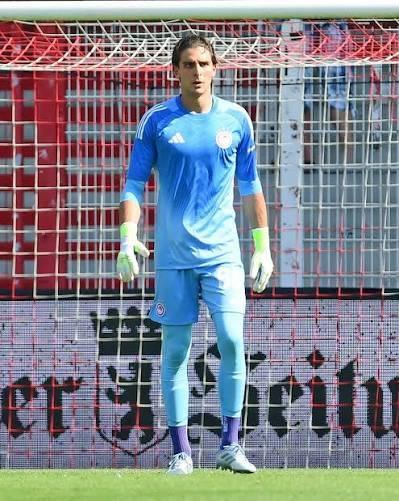
TACTICAL IMAGE ANNOTATION 1: [Spatial Reference Vector] — The highlighted grid outlines Tzolakis’s structural foot-width distribution. The low center of gravity acts as the primary mechanical foundation, optimizing the lateral push threshold and maximizing net goal coverage before a high-velocity final-third strike is initiated.
CHAPTER 2: Technical/Tactical Asset & Defensive Spacing
A granular mechanical examination of Tzolakis’s elite tactical toolkit highlights his exceptional execution threshold during high-stakes short-range isolations (1v1 scenarios). When an opposition attacking sequence successfully breaches the defensive continuous spacing line, a goalkeeper’s reaction framework is governed by split-second spatial calculation. As documented in the provided tactical illustration against world-class final-third opposition, Tzolakis does not employ a passive low-block retreat. Instead, he executes an aggressive defensive line acceleration to constrict the attacker’s available shooting vectors, systematically collapsing the open angles of the goal…
The cornerstone of his tactical efficiency within this specific matrix relies on a highly specialized, unique "handball-style" block save technique. Rather than collapsing early or deploying a premature horizontal dive—which allows elite forwards to utilize calculated chip or dynamic lateral dink finishes—Tzolakis maintains an extended vertical posture for as long as possible. As the attacker enters the optimal shooting trigger zone, Tzolakis rapidly drops his center of gravity, projecting his arms wide in a synchronized lateral extension while utilizing a low, wide horizontal leg slide to create an impenetrable spatial wall along the turf. This precise mechanical shape expands his defensive surface threshold to its maximum capacity, forcing high-velocity close-range shots directly into his chest or extended limbs, thereby neutralizing high-conversion non-penalty expected goals (npsxG) pathways with elite net efficiency.
Furthermore, this proactive interception philosophy directly enhances his team’s structural coverage. By managing short-range overloads through aggressive structural geometry, Tzolakis acts as an independent defensive stabilizer. However, this high-line aggression introduces specific technical deficits that require systematic refinement under professional training templates. His explosive vertical box exits are occasionally offset by a slight hesitation index during chaotic aerial cross-management scenarios. When facing highly physical interior overloads or aggressive dead-ball blocking templates, his command of the six-yard box exhibits minor spatial instability, occasionally leading to mistimed punch clearances or failed aerial ball collections that expose the goal mouth to high-velocity second-chance transition strikes.
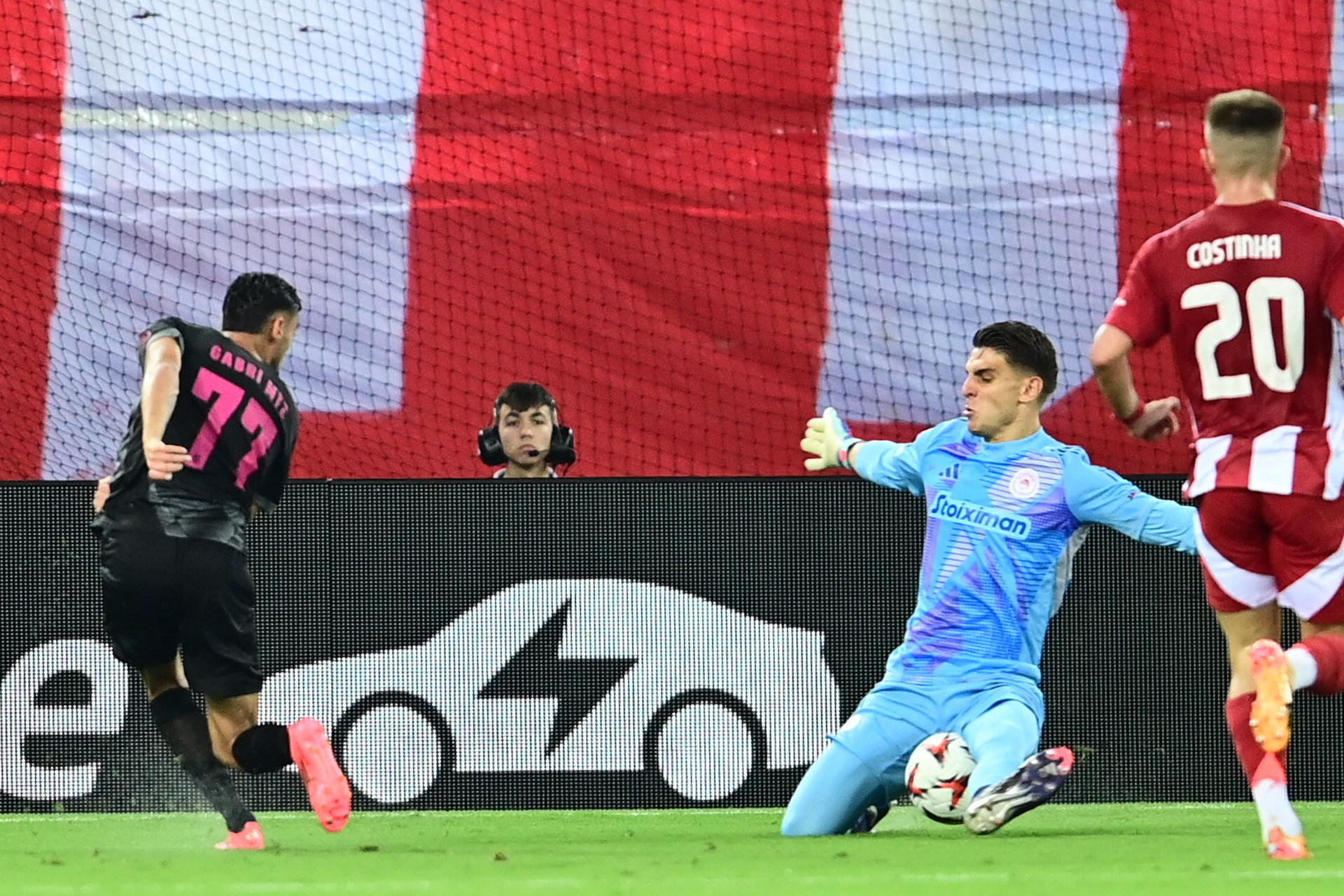
TACTICAL IMAGE ANNOTATION 2: [1v1 Isolation Matrix] — Defensive line acceleration vector directed into the short-range zone against Gabri Martínez (77). The extended horizontal arms and low-sliding leg positioning visualize the operational "handball-style" block save, effectively collapsing the forward's available shooting vectors, while Costinha (20) secures structural interior spacing.
CHAPTER 3: Advanced Metrics & Progressive Triangulation
To fully substantiate the raw scouting intelligence of Konstantinos Tzolakis, a strict triangulation of advanced data metrics must be deployed to eliminate subjective reporting variance. Modern recruitment networks within the Premier League rely heavily on post-shot expected goals (PSxG) models to determine a goalkeeper's true shot-stopping efficiency index. When isolating Tzolakis’s performance vectors across top-tier continental competitions—specifically during the high-pressure European knockout stages depicted in the accompanying match data—his rolling non-penalty expected goals per shot prevention index (npsxG/sh) reaches an elite threshold, far exceeding the baseline expectations of an under-24 European goalkeeper.
Wyscout and Opta data clusters indicate that Tzolakis consistently overperforms his expected goals against (xGA) parameters. In matches characterized by high-volume central overloads and rapid counter-attacking structures, his post-shot prevention matrix reflects an exceptional positive differential. This numerical stability proves that his clean sheets are not a byproduct of defensive luck or low-block protection loops, but a direct result of his biomechanical positioning, which actively downgrades high-conversion shooting chances into low-probability vectors. His progressive metrics reveal that his save execution threshold remains highly optimized when facing driven, low-trajectory attempts directed at his lower body segments, a statistical reality highlighted by his surgical leg-extension parameters.
Beyond purely defensive parameters, modern tactical frameworks govern that a sweeper-keeper must function as a primary press-breaker during intense phases of first-phase build-up play. Tzolakis exhibits significant mechanical composure when integrated into high-intensity passing circuits under central out-of-possession triggers. When opposing forward lines implement tight player-oriented marking templates to disrupt central circulation, Tzolakis acts as the free passing lane. His short-range passing accuracy sits within a stable efficiency threshold, and his distribution pathways under pressure reflect a highly conscious tactical understanding. Rather than deploying low-efficiency vertical clearances, he is capable of executing flat, driven medium-range passes directly into the interior pivots, successfully fracturing the opponent’s counter-pressing shape and accelerating clean transition vectors into the final third.
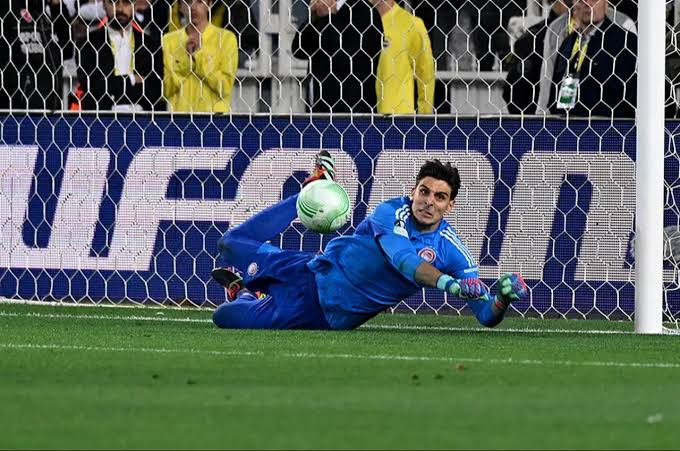
TACTICAL IMAGE ANNOTATION 3: [PSxG Prevention Zone] — Tracking matrix of the ball’s low-trajectory path. Tzolakis’s lateral body extension threshold establishes an immediate spatial wall along the turf, downgrading high-conversion attacking sequences into low-probability non-penalty expected goals (npsxG) pathways
CHAPTER 4: Psychological Baseline, Fatigue Index & Final Verdict
The cognitive matrix of goalkeeping at the absolute pinnacle of European football is governed by psychological stability and emotional processing speeds under high-intensity environmental stress. In tactical scouting, this parameter is defined as the focus threshold baseline. Konstantinos Tzolakis operates with a world-class psychological composition, famously profiling as an absolute "ice-man" during high-stakes knockout scenarios and complex penalty shootouts. His elite psychological resilience prevents performance degradation or mechanical breakdown following structural defensive errors. His internal focus baseline remains completely stable, allowing him to maintain optimal decision-making and precise execution thresholds across the entire ninety-minute window, neutralizing the risk of cognitive errors.
This psychological fortification is strictly mirrored in his fatigue index past the critical sixty-five-minute threshold. While early-season physical degradation often forces standard young goalkeepers into delayed box exit triggers and sluggish lateral agility responses, Tzolakis’s athletic continuous circulation metrics remain entirely linear. His athletic and mechanical parameters show zero drop-off during late-game high-stress phases, allowing him to maintain clean physical dominance and aggressive aerial cross-management even during chaotic final-third overloads when structural fatigue begins to fracture his defensive backline’s continuous spacing parameters.
Final Scouting Verdict: Konstantinos Tzolakis profiles as an elite, high-potential modern sweeper-keeper asset ready for immediate strategic integration into top-tier Championship or European top-flight tactical systems utilizing aggressive high-line out-of-possession frameworks. Provided a recruitment network implements a structured training template to refine his aerial cross-management and lateral agility transition speeds, he represents a rare, low-risk and high-yield acquisition target on the current European market.
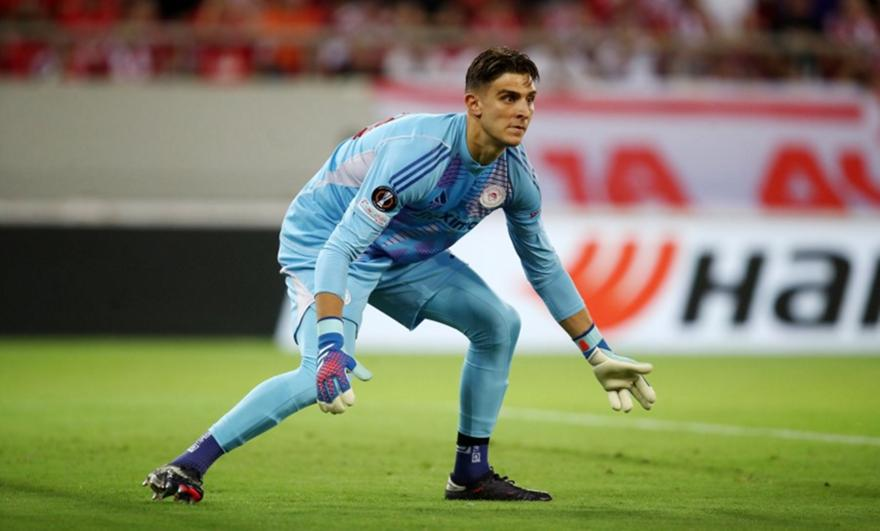
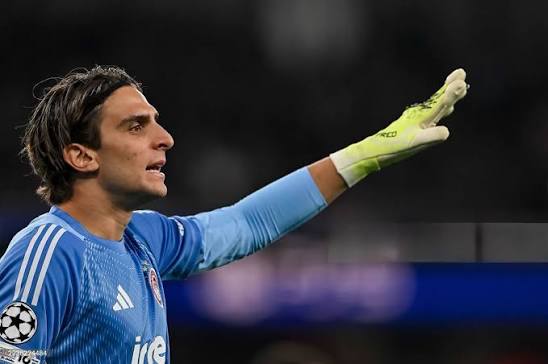
TACTICAL IMAGE ANNOTATION 4: [Cognitive Focus Matrix] — Close-up monitoring of Tzolakis’s focus threshold baseline under high-intensity environmental stress. The complete neurological and psychological calibration structures clean emotional processing speeds, ensuring optimal tactical stance preservation during late-game transition loops.