Football’s Forgotten Weapon: The Art of Switching Play
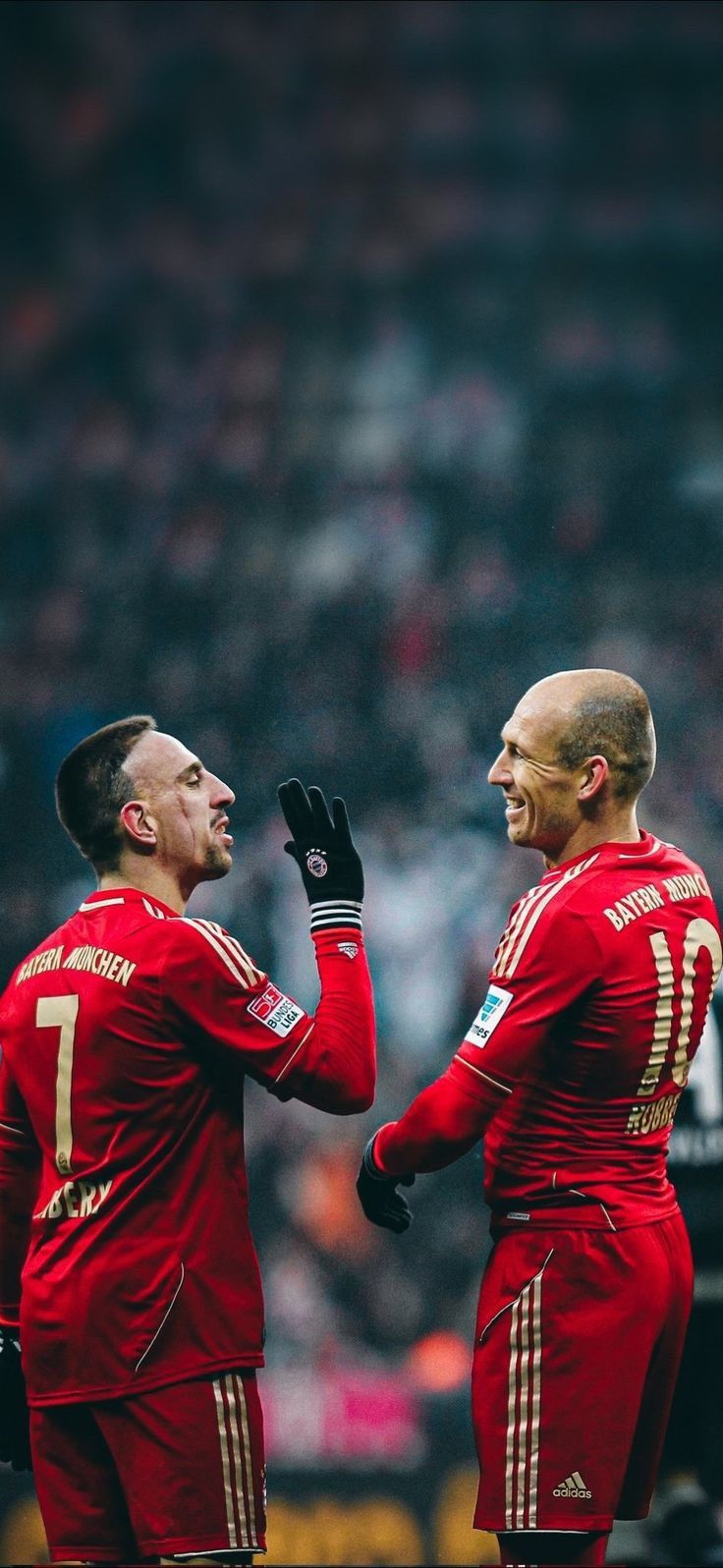
From Bayern Munich’s Arjen Robben and Franck Ribéry to Liverpool’s Trent Alexander-Arnold and Andy Robertson, switching play has helped some of football’s most dangerous teams exploit space. So why does it sometimes feel neglected when modern sides struggle to break down stubborn defences?
Watching a dominant team struggle against a compact defensive block can be an exercise in frustration. The ball moves from centre-back to midfielder, from midfielder to full-back, and back again, while the opposition remains organised and the attacking team makes little progress. Possession accumulates, but meaningful chances remain elusive.
Modern football is tactically sophisticated, built around positional play, pressing triggers, overloads and carefully rehearsed movements. Yet when a team cannot penetrate a congested defence, one of the game’s most straightforward attacking principles can appear underused: switching play quickly from one flank to the other.
This is not to suggest that modern football has abandoned diagonal passes. Elite teams still use them regularly. The more interesting question is whether some sides become too committed to their preferred attacking patterns, overlooking opportunities to exploit space elsewhere. There is a difference between circulating possession to retain control and moving the ball to unsettle an opponent.
From the Premier League of the early 2000s to Bayern Munich’s formidable wingers and Liverpool’s attacking full-backs, the switch of play has repeatedly shown its value. Its underlying principle remains simple: draw the opposition towards one area, then exploit the space it leaves behind.
The value of changing the point of attack
Switching play means transferring possession from one side of the pitch to the other, whether through a long diagonal from a centre-back, a pass from a deep-lying midfielder or a quicker sequence of shorter passes. Its real value, however, lies not in the distance the ball travels but in the defensive movement it exploits.
When a team builds an attack down one flank, the opposition must respond. The full-back closes down the ball, a midfielder provides cover and nearby defenders shift across to protect dangerous spaces. As the defensive block becomes concentrated around the threat, the opposite flank can become exposed.
A quick switch allows the attacking team to exploit that imbalance before the defence can recover. A winger might receive the ball with room to run at his full-back, or an advancing full-back could carry possession into the final third. Instead of trying to force a pass through a congested centre, the team creates an opportunity by attacking space that has opened elsewhere.
Timing is crucial. A slow switch gives defenders time to shuffle across and restore their shape; a fast, accurate pass can catch them moving, leaving the receiver with space and momentum. The objective is not simply to move the ball from right to left, but to move it faster than the opposition can reorganise.
This is particularly valuable against low blocks, where opponents deliberately restrict space between the lines and protect the central areas. Repeatedly attacking through the middle often plays into their hands. Moving the ball across the pitch forces defenders to cover more ground and make decisions about when to shift, close down or maintain their positions.
Lessons from an earlier era
The early-to-mid-2000s Premier League offered plenty of reminders of the importance of width. Wingers often operated closer to the touchline, full-backs overlapped, and players with exceptional passing ranges could change the direction of an attack with one delivery.
David Beckham was a notable example of a player capable of switching play with precision. His range of passing allowed him to find teammates on the opposite flank, often placing them in a position to receive the ball in stride and advance. Ryan Giggs offered a different threat, using acceleration and direct running to turn possession into a dangerous attack.
These players had different strengths, but their effectiveness reflected a broader principle: width could create opportunities that were difficult to find through central combinations alone. A quick diagonal could bypass pressure, stretch the defence and give a wide player the chance to attack a defender before additional cover arrived.
That era should not be romanticised as tactically superior to the modern game. Today’s players are often more versatile, and coaches have developed sophisticated methods of creating and exploiting space. Nevertheless, the earlier emphasis on width offers a useful reminder that attacking football does not always require another intricate combination. Sometimes, the better solution is to move the ball away from congestion.
Robben and Ribéry: two wingers, two problems
Bayern Munich’s Arjen Robben and Franck Ribéry provide one of the clearest examples of how width and switching play can complement individual brilliance.
Robben, operating predominantly from the right, became famous for cutting inside onto his left foot. Ribéry, from the opposite flank, offered acceleration, close control and the ability to beat defenders in tight spaces. Both could decide matches individually, but their presence on opposite sides of the pitch also created a tactical dilemma for opponents.
When Bayern concentrated possession on Robben’s side, the opposing full-back had to deal with his threat, often with a midfielder or centre-back providing additional cover. As defenders shifted towards the ball, space could open on Ribéry’s flank. A quick switch could then find the Frenchman before the defence recovered, giving him the opportunity to attack his marker in a more favourable one-versus-one situation.
The same principle worked in reverse. If Ribéry attracted several defenders, Robben could become the beneficiary of a switch that isolated him against a full-back. Bayern could use the threat on one side to create an opportunity on the other, forcing opponents to decide whether to concentrate their defensive resources around the ball or protect the full width of the pitch.
Their partnership demonstrated that switching play was more than a way to escape pressure. It could be a deliberate method of creating favourable individual matchups for players capable of exploiting them.
Bayern’s 2010 Champions League quarter-final against Manchester United offers a useful illustration of the wider principle. Their ability to stretch United across the pitch and threaten from wide areas showed how changing the point of attack could contribute to an effective attacking structure. The switch was not the whole strategy, but it helped create the conditions in which individual quality could make the difference.
Liverpool’s full-backs and a modern interpretation
Jürgen Klopp’s Liverpool offered another compelling example through Trent Alexander-Arnold and Andy Robertson. Rather than relying solely on traditional wingers to provide width, Liverpool made their full-backs central to their creative play.
Alexander-Arnold developed a reputation for his long diagonals, frequently finding Robertson advancing on the opposite flank. Robertson’s energy and forward movement then allowed Liverpool to turn those deliveries into attacking momentum. The ball could travel from one side to the other without the team having to negotiate every line of the opposition’s defensive structure.
This was not simply a case of two full-backs crossing into the penalty area. Their positioning formed part of a wider attacking system, with forwards threatening the inside channels and midfielders supporting the build-up. The full-backs helped stretch the opposition horizontally, while their passing range allowed Liverpool to move possession into advanced areas and create opportunities for crosses, combinations and individual attacks.
The key was that the receiving player was already positioned to exploit the pass. A switch towards a full-back who remains deep and isolated may achieve little; a switch towards a player positioned high and wide can immediately threaten the defence.
Liverpool’s approach showed that width and tactical sophistication are not mutually exclusive. Their full-backs could support the team's broader structure while providing a direct route into dangerous areas. Their contribution also highlighted an often-overlooked quality in a modern defender: the ability to connect both sides of the pitch with a single pass.
Robben and Ribéry used switching play to create opportunities for dangerous wingers, while Alexander-Arnold and Robertson demonstrated how full-backs could fulfil a similar function. Different players, different systems, but the same principle: the ball can travel faster than the defence can adjust.
When possession becomes predictable
Why, then, can teams look short of ideas against organised opposition? One possible explanation lies in the modern emphasis on positional play and central control.
Many leading sides use inverted full-backs, midfield rotations and short passing combinations to establish numerical superiority in central areas. These methods can help teams retain possession, progress through pressure and protect themselves against counter-attacks. They are not inherently opposed to switching play; an inverted full-back can be ideally positioned to deliver a diagonal pass.
Problems arise when the attacking structure becomes too narrow or predictable. If players repeatedly move towards the ball and the team continues trying to progress through the same congested channels, the defence can concentrate its resources around a relatively small area. The far-side winger may be available, but the ball continues to circulate in front of the defensive block.
The result is possession without penetration. The attacking team retains control, yet the opposition remains comfortable because it can anticipate the next pass and protect the spaces that matter most.
Of course, a switch is not always the right option. The passing lane may be blocked, the receiving player may lack support, or a misplaced diagonal could expose the team to a counter-attack. At elite level, risk management matters. The point is not that every attack should end with a long pass, but that teams should recognise when the switch offers a better route forward than another attempt to force the ball through the middle.
Tactical sophistication becomes counterproductive when patterns are followed regardless of the situation. Good attacking play requires structure, but it also requires players to recognise when the available space demands a different decision.
From possession to penetration
Switching play can also help teams gain territory. A diagonal from a centre-back towards a high full-back may bypass several opposing players, allowing the receiver to carry the ball forward or combine with a winger. Rather than advancing through a series of congested central areas, the team can move directly into a more promising position.
Against an aggressive press, a switch can exploit the space left behind when opponents commit players to one side. Against a low block, it can shift defenders laterally and create a favourable matchup near the touchline. The purpose differs according to the situation, but the principle remains the same: move the ball towards space the opposition is struggling to protect.
What happens after the switch is equally important. The receiving player must be ready to exploit the advantage by carrying the ball, taking on a defender or combining with a teammate. If the ball simply returns to the centre without putting the defence under pressure, the opportunity may be wasted.
Coaches can encourage this approach by using overloads deliberately. Concentrating players on one flank can draw the opposition across, provided a player remains available on the other side. The passer must scan early, recognise the defensive shift and deliver the ball before the space disappears. The receiver must maintain an effective position and be prepared to move the attack forward.
These are simple principles, but executing them consistently requires collective awareness. The best switches are not isolated moments of individual brilliance; they are the result of players understanding how their positioning can manipulate the opposition.
Rediscovering the switch
Modern football does not need to abandon positional play, intricate combinations or central overloads. Those methods remain valuable, and different teams will use width in different ways depending on their personnel and tactical approach. What deserves greater attention is the switch as a purposeful attacking weapon, rather than merely a means of recycling possession.
Robben and Ribéry showed how moving the ball between dangerous wingers could create favourable one-versus-one situations. Alexander-Arnold and Robertson demonstrated how the passing range of attacking full-backs could stretch the opposition and accelerate progress into the final third. Their examples underline the importance of having players who can recognise space, deliver the ball accurately and exploit the advantage created.
When a team repeatedly attacks through a congested centre, the opposition can settle into a predictable defensive rhythm. Switching play disrupts that rhythm by forcing defenders to cover more ground and reassess their positions. Even when it does not produce an immediate chance, it can shift the defensive block, create territorial gains and make the next attack more dangerous.
The issue is not that modern football has forgotten how to switch play, but that teams can sometimes overlook its value while pursuing more elaborate solutions. The ball does not always need to pass through another crowded zone, nor does every attack require a new combination to unlock the defence. Sometimes, the most effective move is a well-timed diagonal towards the space the opposition has left behind.
Football has become increasingly sophisticated in its understanding of space, but controlling space is only part of the challenge. The other is recognising when to attack it elsewhere, before the opposition has time to recover. A purposeful switch can turn sterile possession into forward momentum, and it remains one of the simplest ways to make an organised defence uncomfortable.