From Monitoring to Must-Sign: The Recruitment Power of the World Cup
In modern football, major international tournaments are no longer just stages for national pride.
They are accelerated recruitment markets. The World Cup, in particular, operates as a global shop window where scouting departments, data teams, and sporting directors watch with unusual intensity. It compresses years of observation into weeks and, for certain players, reshapes entire career trajectories in real time.
Elite clubs now operate with recruitment systems that are more advanced than ever. Liverpool, Manchester City, and a handful of Europe's elite have built multi-layered scouting models combining live observation, data analytics, video scouting, and behavioural profiling. Every player is tracked long before they step onto a World Cup pitch. Yet what the tournament offers is something no database can fully replicate: performance under pressure, in unfamiliar tactical environments, against elite opposition, with global attention fixed on every touch. That combination is what turns a good player into a priority target.
The World Cup has always had this effect, but its modern influence is more refined. Clubs do not discover players anymore; they validate them. A strong tournament does not suddenly introduce a name to recruitment departments, but it can move that name from the "monitoring" folder into the "urgent" category.
History is full of examples. In 2014, James Rodríguez produced one of the most iconic World Cup performances in recent memory. His goals, particularly the strike against Uruguay, transformed him from a talented attacking midfielder into a global star. Real Madrid moved quickly, not because they lacked information on him, but because the tournament confirmed what elite clubs already suspected: he could deliver on the biggest stage.
A similar story can be traced back to 2010 with Mesut Özil. His performances for Germany in South Africa, particularly his ability to dictate tempo between the lines, elevated him into one of Europe's most sought-after creative midfielders. Real Madrid secured him shortly after, a move that reflected both his technical profile and the timing of his emergence. The World Cup did not create Özil's reputation, but it accelerated it to elite-level visibility.
This pattern repeats itself every cycle. Clubs such as Manchester City and Liverpool have become particularly efficient at converting tournament performances into transfer decisions. City's recruitment model under Pep Guardiola has prioritised tactical intelligence, versatility, and technical security under pressure. Liverpool, especially under their modern recruitment structure, have leaned heavily on identifying players whose output translates across systems and leagues rather than purely domestic dominance.
Argentina's triumph in 2022 offered another illustration. Alexis Mac Allister's assured displays in midfield strengthened Liverpool's conviction that he possessed the temperament and tactical intelligence required for their evolving system. Enzo Fernández represented an even starker example. Having arrived at Benfica only months earlier, his World Cup performances transformed existing interest into immediate action, with Chelsea moving decisively despite the substantial financial outlay.
International tournaments help test exactly that. A player who thrives in a structured club environment may struggle when asked to adapt to a different national setup. Conversely, a player who appears system-dependent at club level can suddenly flourish when given a role that better suits their natural instincts. Recruitment departments are watching both outcomes closely.
The same principle applies to the European Championship. Euro 2024, for example, reinforced how continental tournaments now function as transfer accelerators. Italy's Riccardo Calafiori enhanced his reputation significantly through his composure, ball progression, and defensive maturity—performances that contributed to Arsenal moving decisively to secure his signature. His ability to operate as both a defender and progressive passer matched the Premier League's current tactical demands.
Similarly, Mikel Merino's displays for Spain reinforced his profile as a high-level midfield operator capable of controlling tempo, winning duels, and contributing in advanced areas. His subsequent move to Arsenal reflected not only long-term scouting but also the confirmation effect of tournament football. In both cases, Euro 2024 acted as a validation platform rather than a discovery mechanism.
What makes the World Cup unique, however, is its scale. It is the only competition where emerging talents share the same stage as global superstars, and where a single standout performance can shift perception instantly across every major league in the world. Recruitment teams from the Premier League, La Liga, and Serie A are not just watching; they are comparing players directly under identical conditions.
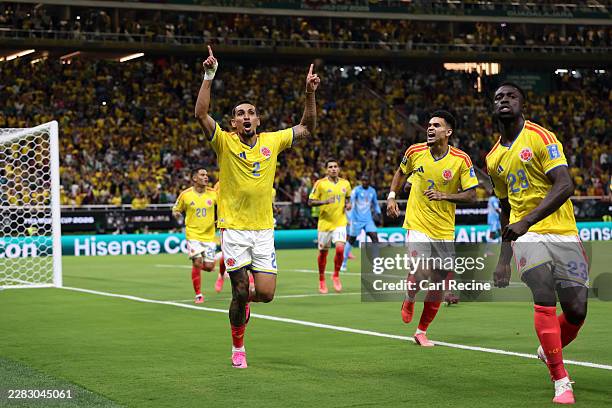
This is where the concept of players moving to the forefront of recruitment discussions becomes important. Clubs may already know about Daniel Muñoz or Maximiliano Araújo, but a strong World Cup can elevate them from secondary targets to priority options. Both have certainly impressed during the group stages of the 2026 World Cup so far. Muñoz, with his relentless running and attacking output from right-back, fits the modern demand for full-backs who contribute in both phases of play. Araújo, meanwhile, offers dynamism, directness, and tactical flexibility from wide areas—qualities that are increasingly valued by top sides looking for unpredictability in one-versus-one situations.
For clubs in the Premier League's top four, these profiles are particularly attractive because they solve specific tactical problems. Depth, intensity, and adaptability are no longer squad luxuries; they are structural requirements. A player who performs under World Cup pressure is often seen as more "transfer-ready" because they have already been exposed to elite intensity, media scrutiny, and tactical variation.
There is also a psychological layer that recruitment departments cannot ignore. Players who excel in international tournaments often demonstrate resilience and confidence that translate well into elite club environments. The ability to perform while representing a nation, often in unfamiliar systems and with limited preparation time, is increasingly viewed as an indicator of adaptability.
However, clubs are also more cautious than in previous eras. A strong tournament does not automatically trigger a signing anymore. Instead, it triggers deeper analysis. Was the performance repeatable? Was it system-driven? Did the player benefit from specific match conditions? Recruitment teams now dissect these questions in detail before committing to multi-million-pound decisions.
Still, the momentum created by the World Cup remains powerful. It shapes narratives, shifts valuations, and, most importantly, creates urgency. In a transfer market driven by timing as much as talent, urgency is often decisive.
As football continues to globalise and data becomes more sophisticated, the World Cup retains a unique place in recruitment strategy. It is both a showcase and a stress test. For some players, it confirms their elite status. For others, it opens doors that may not have otherwise appeared.
And for clubs at the top of the game, it remains one of the last truly universal scouting grounds where the entire world watches the same players at the same time, and decisions that define careers are made in real time.
More from Mohamed Weheliye coming soon.
Visit the profile to follow and get notified when the next piece lands.