The Lost Art of Anticipation: Why Goalkeepers Still Need Instinct in a Data-Driven Eratitled
The Goalkeeper's First Save Happens Before the Shot
There is a particular habit I have developed when watching football that often leaves me paying less attention to the ball and more attention to the goalkeeper.
Not necessarily to admire a spectacular dive or a fingertip save, but to study the seconds before the attempt arrives. The small adjustments. The positioning. The body shape. The subtle shift in weight. The anticipation.
Modern football has changed the demands placed upon goalkeepers. The elite goalkeeper is no longer judged solely by reflexes and command of the penalty area. He is expected to participate in possession, attract pressure and initiate attacks.
It is one reason why goalkeepers such as David Raya and Alisson Becker have become so valuable. Their technical ability with the ball at their feet allows their teams to construct play differently. Opponents hesitate to press aggressively because these goalkeepers can bypass pressure with a clipped pass or split a defensive line with a measured ball into midfield.
Alisson's passing range has become an important component of Liverpool's build-up. Raya offers Arsenal numerical superiority in the first phase of possession and gives defenders the confidence to recycle the ball under pressure. Their understanding of the modern game extends beyond keeping the ball out of the net.
Yet there is another aspect of goalkeeping that fascinates me even more.
Anticipation.
Some goalkeepers appear to possess an instinctive understanding of where danger will emerge before it materialises. It is not always reflected in highlight reels because the save itself can seem routine. In reality, the save was made possible several seconds earlier.
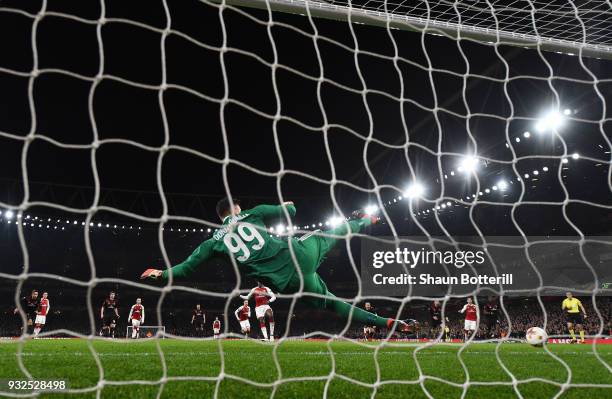
Gianluigi Donnarumma is an excellent example. For a goalkeeper of his size, he reads situations remarkably quickly. He often arrives at the destination before the striker has fully committed to a finish. The save looks straightforward because his preparation was exceptional.
Marc-André ter Stegen operates similarly. At his peak, he seemed to understand the attacking player's intentions almost before they did themselves. Rather than relying solely on explosive athleticism, he narrowed angles with small adjustments and positioned himself in locations that reduced the available target. He is an expert on saving goals with his legs , using it as last means of defence if he knows he cannot get down with his hands.
This ability is difficult to quantify, but I suspect it has tangible consequences over the course of a season.
Imagine a goalkeeper correctly predicting the direction of three additional shots that he otherwise reacts to a fraction too late. Three extra saves could become three additional clean sheets. In certain circumstances, those clean sheets may translate into anywhere between three and nine points.
Margins in elite football are often microscopic. Liverpool won the league in 2019-20 with 99 points. Manchester City claimed the title in 2021-22 by a single point. Qualification for European competition is frequently decided by goal difference. Relegation battles can hinge upon one result.
A goalkeeper's anticipation may therefore influence an entire campaign more than we appreciate.
This quality has long existed among the best. Manuel Neuer revolutionised the position through his sweeping, but his anticipation was arguably his greatest weapon. He recognised through balls before they were played and transformed potentially dangerous situations into comfortable recoveries.
Jan Oblak has built a reputation on similar principles. He rarely appears rushed because he has already processed the likely outcome of an attack. Even someone like Thibaut Courtois benefits enormously from reading body language early. His size covers much of the goal, but his understanding of the shooter's intentions makes him even harder to beat.
Perhaps anticipation is the final frontier of goalkeeping analysis.
Data can tell us how many goals a goalkeeper prevented compared to expectation. It can measure pass completion and progressive distribution. It can even estimate the difficulty of a save.
What remains harder to capture is the goalkeeper who notices a striker opening his hips half a second earlier, who shuffles six inches to his left before anyone else recognises the danger, or who understands from a teammate's body position that a cutback is inevitable.
As supporters, we often celebrate the spectacular save because it is visible. The unseen save deserves equal admiration.
Sometimes the difference between conceding and preserving a clean sheet is not agility, reach or power.
It is simply seeing tomorrow's shot a moment before everyone else.
More from Mohamed Weheliye coming soon.
Visit the profile to follow and get notified when the next piece lands.