
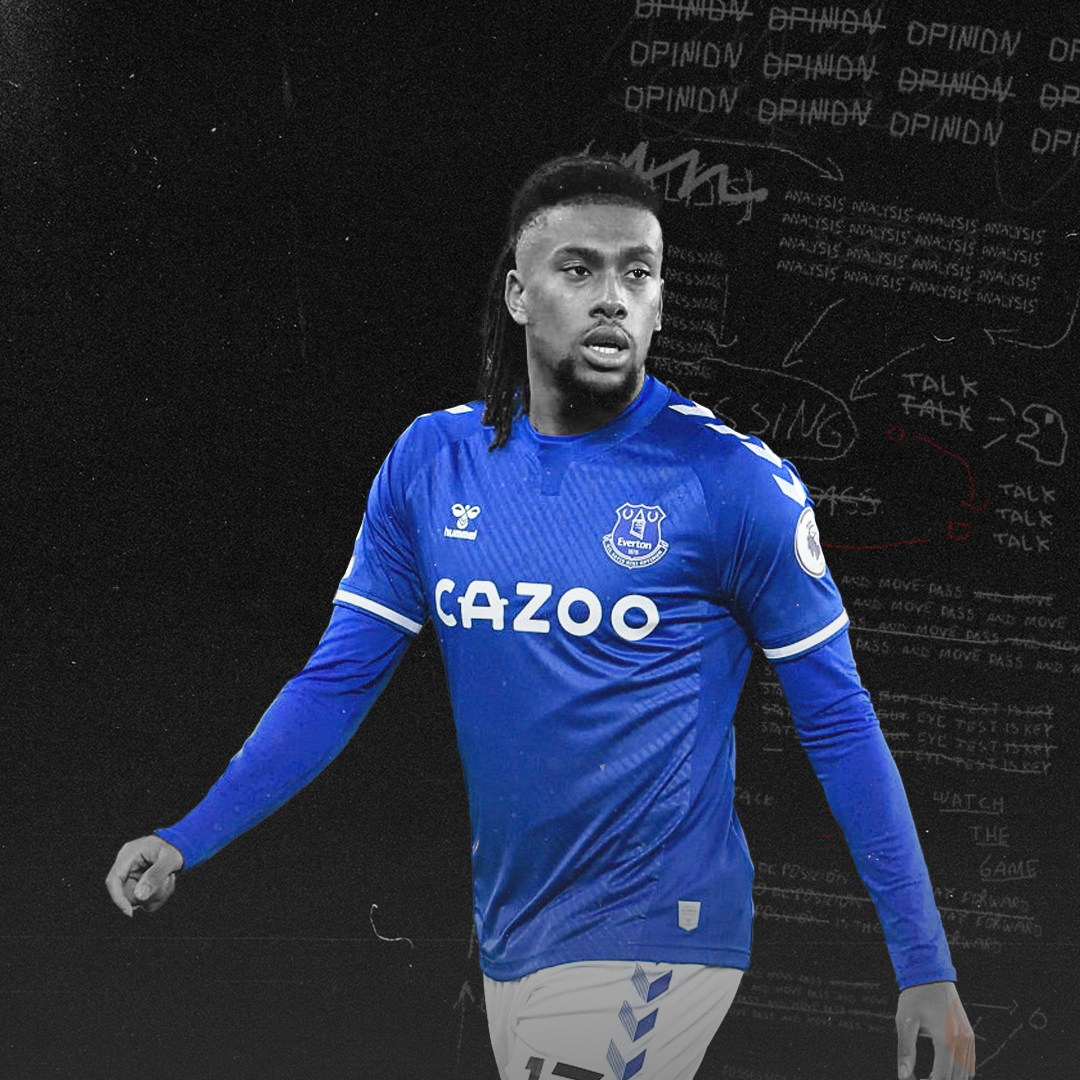
Alex Iwobi: The Invisible Conductor of AFCON 2025
Black drapes her like midnight woven from silk and authority. Not a colour that shouts. But a colour that commands, that silences the room before a word is spoken. The black of inevitability, the black of mastery. Her hands fold—not in timid restraint, but in absolute possession. The faintest touch, the smallest gesture, and you feel: control has been claimed, not shouted.
A lace traces her sleeves, delicate, intricate, yet unyielding—proof that strength can wear finesse, that power can bow to grace. Pearls encircle her neck. Each one a whisper from the past, a reminder that true elegance is not an accident of time, but a cultivated certainty. Her gaze—a measured, unwavering flame—does not search for the world. It holds it. It fixes everything in its orbit, bending chaos to its will without a single shout.
There is no fanfare here. No desperate cry for attention. Yet nothing dares ignore her. The air itself leans closer, breath caught, knowing that it is in the presence of something rarer than beauty: something immortal. You expect elegance to be a whisper in the wind. But true elegance—real elegance—does not whisper. It dictates. It decides. It conquers, quietly, completely, without apology.
Ademola Lookman: Why the Nigerian Star Deserves to Be Crowned as Africa’s Finest
This elegance is not simply observed. It moves. It flows. It commands the field. It is the gravity of midfield, the heartbeat of a team, the rhythm of an entire tournament. This elegance is Alex Iwobi. Not a figure of mere admiration. But the central midfielder who bends AFCON to his will. The man through whom the game breathes. Elegance does not linger in pearls or lace. It manifests in movement. In vision. In the quiet, devastating authority of Alex Iwobi.
The Prelude to Decisiveness
Football has a habit of looking backwards, applauding what is seen rather than what is orchestrated. Goals, assists, key passes—they are crystallised moments of meaning. The vast terrain of action before them is too often dismissed as “build-up,” vague and intangible.
Iwobi’s AFCON 2025 performance exposes the limitations of this reductive approach. His influence was omnipresent, yet invisible to the untrained eye. He was not often the player scoring, nor the one finishing the move; he was the architect, the orchestrator who created conditions for success long before they were visible.
Every sequence he touched was a small prelude: shaping attacks before danger appeared, stabilizing possession before pressure could materialize, bending defenders out of position before the final threat emerged. This is not coincidence. This is deliberate, structural mastery—a quiet engineer of inevitability.
The Midfield Question
Nigeria entered AFCON 2025 with a recurrent strategic dilemma: a forward line blessed with explosive threat — Victor Osimhen’s verticality, Ademola Lookman’s diagonal dynamism, and the relentless width of pacey wingers — contrasted sharply with a midfield that demanded balance above all else.
The challenge was not who would dazzle with individual moments but who would regulate the intricate, invisible mechanics of space and tempo that allowed those moments to exist.Tournament football magnifies every imbalance. Moments arrive quickly, margins collapse, and teams are often undone not by lack of quality, but by an inability to manage the intervals between actions. Talent alone is insufficient. Someone must choreograph it.
Samuel Chukwueze: The Long-Awaited Arrival of Nigeria’s Latest Attacking Sensation
Iwobi was never intended to shine alone. He is the reference point, the anchor, the axis around which the team could breathe. Tournament football does not reward flamboyance alone; it rewards control, rhythm, structure. And in that space, Iwobi is sovereign.
Neither No.10 Nor No.8: The Connector
Iwobi’s role defies tidy classification. He was neither a traditional No.10 operating exclusively between the lines nor a box-to-box No.8 racing forward at every opportunity. He was connective, a stabilizer, a spatial engineer.
In possession, his positioning was diagonal, calculated. He offered angles to progress play rather than demanding them, subtly dictating the flow without overt intervention. By receiving not to turn under pressure but to reorient the attack, he forced opponents to adjust their defensive references continuously. This created invisible corridors of movement, expanding space where none seemed to exist.
This is the type of football that does not announce itself. It does not seek attention. Yet the effect is unmistakable: each action that follows is easier, more coherent, more inevitable. Iwobi’s most crucial passes rarely led directly to shots. They reshaped defensive structures just enough for the next player to exploit. They arrived under control, often before the opposition had fully aligned, and shifted play laterally or diagonally, creating space for the final decisive ball.
Rafiu Adekunle Durosinmi: The Nigerian Striker Primed for a Big Move
Consider Nigeria’s group-stage clash with Tanzania. Iwobi’s assists were the visible peaks of sequences whose foundations he had laid discreetly. Time and again, he would receive possession, scan, pivot, and deliver the pass that destabilized structure before the final, more celebrated action. Without that intermediate stage, attacks might have been faster, but they would have been predictable—mechanical rather than musical.
Influence Without Theatre
The knockout victory over Mozambique was perhaps the clearest example of Iwobi’s subtle mastery. No goals. No assists. Yet Nigeria controlled the match entirely.
Pass completion statistics fail to capture his impact. More important was where and when he received the ball. Mozambique attempted to step up, only for Iwobi to redirect play into zones they could not immediately access. Goals arrived later, but the damage—the structural collapse—had already occurred.
This is influence without theatre. Authority without fanfare.
Comparison With Other Midfield Profiles at AFCON
Across AFCON 2025, many teams deploy high-energy midfielders tasked with pressing, carrying, and arriving late in the box. These players produced visible output but often at the cost of structural balance.
Nigeria’s approach is different. With Iwobi, they prioritised continuity over intensity. The midfield does not overwhelm opponents physically; it constrains them cognitively. Decisions become harder. Passing lanes close more slowly but more permanently. In this sense, Iwobi represents a different midfield archetype—one closer to infrastructure than ornamentation.
From Club to Tournament Mastery
Iwobi’s experience at Fulham, connecting phases without dominating, primed him for this tournament. Success in high-pressure environments rarely emerges from reinvention; it is refined mastery.
Taiwo Awoniyi: The Nigerian Striker on His Way to Nottingham Forest
His positional discipline, decision-making economy, and controlled timing of interventions were honed over seasons, ready to withstand the scrutiny and intensity of AFCON. He did not impose himself on every sequence; he selected moments with precision, maximizing influence while minimizing .
Conclusion: The Odyssey of the Super Eagles
Nigeria moves like Odysseus’ ship, cutting through the restless sea of AFCON 2025. Each match a wave, each touch of the ball a stroke against currents that could pull them under.
But the first reef looms closest: Algeria. Quarter-final. The first of many trials. A gatekeeper whose shadow stretches long across the pitch, whose challenge must be met not with impulse, but with rhythm, with patience, with the cunning of a captain who knows the tide. Every pass, every pivot, every subtle movement becomes a spell, a charm against distraction, a shield against the sirens’ song.
Beyond Algeria, the horizon teems with kings and warriors: Cameroon with the pride of lions, Morocco with desert heat in their veins, Ivory Coast whispering ancestral cunning, Egypt wrapped in the cloak of pharaohs, Mali and Senegal stalking like silent predators. Each awaits, a mythic figure in this unfolding epic, testing resolve, tempting hubris, daring a single misstep to unmake the quest.
Nigeria sails forward, steady, unshaken. Their movements are not random; they are ritual, a rhythm of inevitability. The ball flows through their feet like Hermes’ winged sandals, swift and precise, carrying them past moments of peril before danger is fully perceived. They are Odysseus’ crew, disciplined, alert, aware that the journey demands more than strength—it demands foresight, cunning, and the quiet, invisible authority of masters who understand the currents beneath the waves.
Algeria will roar. Algeria will tempt. Algeria will strike like Poseidon’s fist, seeking to overturn the ship before it reaches calmer waters. Yet Nigeria knows the sirens’ song. They have learned to see the currents, to feel the rhythm, to dance with danger without surrendering to it. The quarter-final is not merely a match—it is a gauntlet, a labyrinth, a moment where heroes are revealed, where legends whisper their approval or curse.
By Tobi Peter / @keepIT_tactical
Featured Image: @GabFoligno / Emma Simpson – Everton FC