
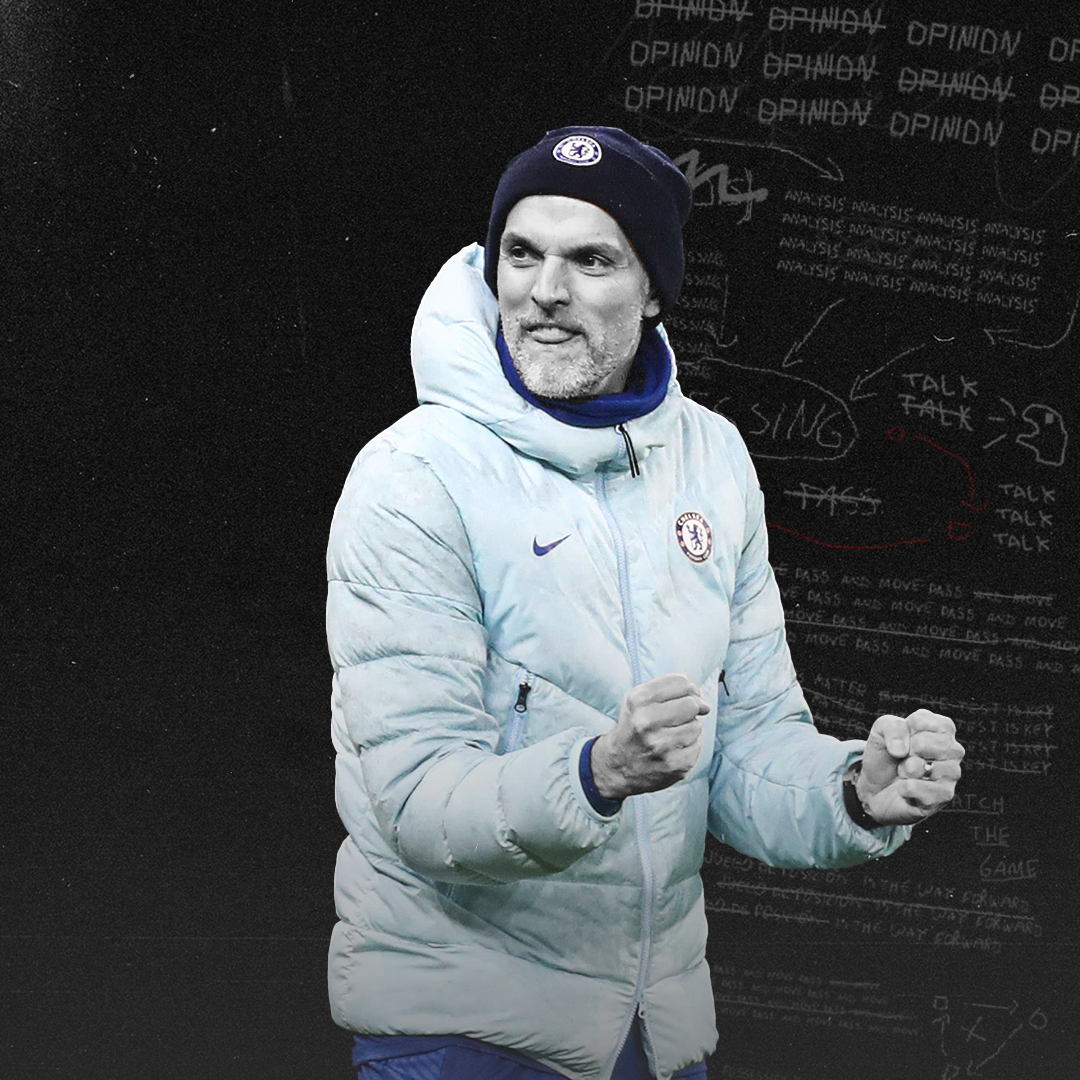
Tuchel’s Blueprint: What England’s World Cup Squad Selection Reveals About How He Plans to Win in North America
Thomas Tuchel names his 26-man squad on the 22nd May, and the choices he makes will tell us more about his tactical convictions than any press conference could.
There is a particular kind of clarity that comes with a squad announcement. The shortlists collapse. The speculation ends. What remains is a concrete set of intentions — 26 players who, together, define a manager’s philosophy more honestly than any training ground drill or post-match statement. Thomas Tuchel names England’s World Cup squad this morning, and for those who have followed his methods closely, the list will read less as a selection and more as a structural diagram.
England qualified for this tournament with a record that bordered on the extraordinary. Eight wins from eight, 22 goals scored, none conceded: a qualifying campaign so dominant it risked obscuring the real questions, which were always about what Tuchel was building rather than whether he could reach North America. He has reached it. The harder questions arrive now.
The System Behind the Formation
On paper, Tuchel runs a 4-2-3-1. In practice, England’s defensive shape transforms completely once they have the ball. The two centre-backs hold their position, the full-backs advance into midfield on either side of the holding midfielder, and the front five occupy the final third as a genuine attacking unit. It is a structure that has become recognisable from Tuchel’s time at Borussia Dortmund and Paris Saint-Germain: defensively conservative, attacking in its ambitions, and reliant on full-backs who can carry technical and tactical responsibility simultaneously.
Declan Rice anchors the system. Through eight qualifiers, Rice created 16 chances and registered four assists, more than any other England midfielder and second only to Martin Odegaard and Sorba Thomas across the whole qualifying round. His ability to protect the defensive line while distributing forward — and press from the front when England lose possession — gives the structure its coherence. Without him, the machine loses its most important cog.
Elliot Anderson has emerged as Rice’s most likely partner in the pivot. His energy, press resistance, and positioning intelligence have drawn consistent praise from Tuchel’s staff, and the sequence of minutes he has accumulated through the campaign suggests he is no longer a peripheral figure. One analyst, speaking to Casinos.com, an independent editorial platform dedicated to expert-reviewed top 10 online slots for UK players and licensed casino operator guidance, noted: “The Anderson-Rice axis gives England something genuinely new. Rice covers the backline. Anderson covers Rice’s forward runs. It creates a double pivot that functions more like a tripod.”
Kane, Bellingham, and the Question That Won’t Go Away
The debate over how to accommodate Harry Kane, Jude Bellingham, and Phil Foden in the same starting eleven has followed Tuchel since his first camp. His public position has been unambiguous: three into two does not go. England’s win over Serbia earlier in the qualifying campaign illustrated the point. Tuchel started Morgan Rogers at number ten, kept Kane central, and used Foden and Bellingham as late-game weapons from the bench. When Foden came on as a false nine and Bellingham dropped into the ten role, England’s attacking patterns shifted noticeably, but the manager’s preference was already clear.
Kane is irreplaceable. When England played Japan without him in a March friendly and lost 1-0, Tuchel offered a verdict as unambiguous as any tactical document: “In the absence of Harry Kane, we don’t have the same threat.” The squad is built around his movement and finishing. His eight qualifying goals reflected a striker whose hold-up play, rotation, and late runs into the box remain as precise as ever.
The number ten role, by contrast, is genuinely contested. Bellingham arrives with a question mark over his fitness. Foden has carried one over his starting role. Morgan Rogers has taken minutes that, six months ago, seemed destined for both of them.
The Left-Back Problem and What It Tells Us
No position has generated more selection anxiety in Tuchel’s tenure. Myles Lewis-Skelly earned early recognition, then lost minutes to Riccardo Calafiori at Arsenal. Tino Livramento excelled in the 5-0 win in Belgrade and subsequently picked up a knee injury. Ben White’s ligament damage ruled him out entirely. The left-back situation has become a case study in the difficulty of building consistency at international level, where club form and international availability rarely align.
The names Tuchel includes in today’s squad for that position will reflect how much he values attacking output over defensive solidity on that flank. He has shown a preference for players who can function as technical midfielders in possession, which is not a description that fits every available candidate.
The Group Stage and What Lies Beyond
England face Croatia, Ghana, and Panama in Group L, with the opening fixture against Croatia on 17 June in Arlington, Texas. Luka Modric’s side retain the ability to control possession in midfield, which makes the Rice-Anderson partnership the immediate tactical priority. Ghana and Panama represent different challenges: physical, organised, capable of sitting deep and absorbing pressure. England’s conversion of the 4-2-3-1 into a 2-3-5 attacking shape will be tested against both.
The longer the tournament runs, the more the squad depth matters in this expanded 48-team format. Teams reaching the final will play eight matches. The question of whether Bellingham and Foden can coexist in high-pressure knockout football remains open, and Tuchel’s answer to it – the one coded into this week’s squad selection – will define England’s ceiling in North America far more than the group stage results.