
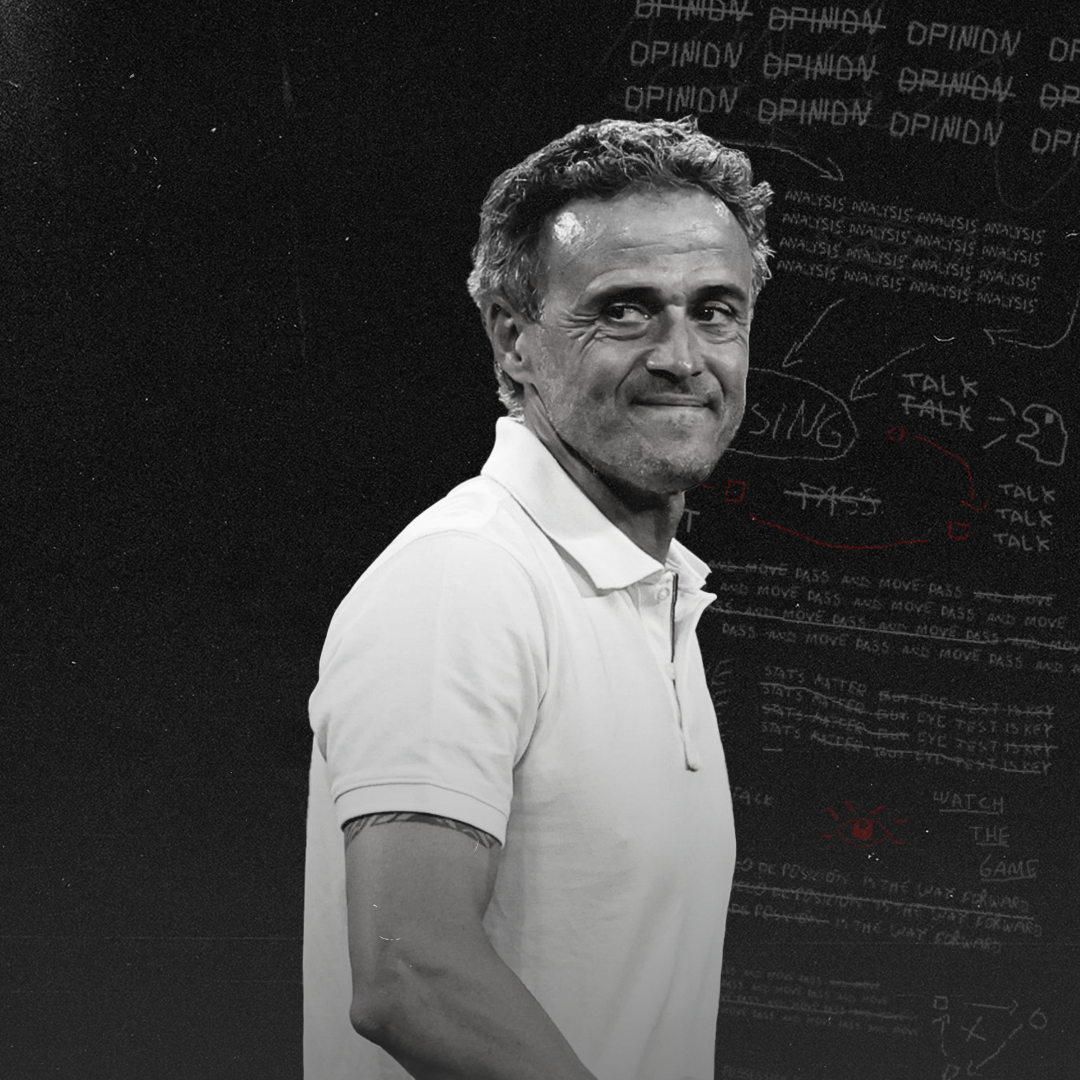
PSG vs Arsenal:The Siege Of Stability.
Champions League. Two words but never merely two words. It is not a competition so much as it is a claim on existence—a statement of belonging whispered across continents, then shouted inside stadiums that forget their roofs. It is the thing a fan argues with life over.The thing a player courts for years without certainty of return. The thing a coach wakes up negotiating with—tactics against fate, logic against myth.
The thing presidents and owners buy and rebuild and reimagine entire futures for, only to discover it cannot be purchased, only pursued. Champions League. A name that rearranges cities. Because to win it is not simply to lift it—it is to be rewritten by it. Ask the fans who have had it. They will not speak first of goals or finals or score lines.
They will speak of nights that refused to end. Of strangers becoming kin beneath floodlights. Of a kind of permanence that football rarely grants—the feeling that, once, just once, they stood at the centre of everything. Ask the players who have touched it. Their voices change. Not louder but slower. As if memory itself demands reverence.
Once Upon A Time in Budapest: Previewing the 2026 Champions League Final
They will tell you about control that was never really control. About pressure that felt like air itself had weight. About moments where time stopped behaving like time. And the coaches they will speak of margins so thin they almost do not exist. Of decisions that become legends or regrets depending on a single touch, a single bounce, a single breath. And yet, beneath all of it, there is one shared illusion— that it might be owned.
But it cannot be owned except by Real Madrid —only they have the divine right. It only allows brief residence. A passing citizenship in the country of the best in class.Champions League. Where greatness is not announced it is verified. And in the collision of PSG and Arsenal, that verification was tested again, not in theory, not in reputation, but in the brutal, beautiful language of a hundred and twenty minutes and them some that refuse to behave.
The Discipline Of Refusal
Mikel Arteta approached the final with remarkable tactical restraint. Many expected Arsenal to press PSG aggressively, especially considering how effective Arsenal’s high pressing has been in major Premier League matches. Instead, Arsenal frequently defended within a compact medium block, prioritising horizontal compactness over aggressive ball pressure.
This approach reflected a deep understanding of PSG’s attacking structure under Luis Enrique. PSG’s positional game is heavily based on provoking disorganisation through movement and relational confusion rather than immediately attacking depth. The constant rotations between Ousmane Dembele, Khvicha Kvaratskhelia, Vitinha, and Achraf Hakimi are designed to force defenders into difficult reference decisions that destabilise collective spacing.
Roberto De Zerbi: Sixteen, Seven Games, and the Refusal to Hurry
Arsenal therefore defended space before defending players. William Saliba and Gabriel Magalhaes resisted the temptation to aggressively follow dropping movements from Dembele, while Declan Rice and Martin Odegaard carefully protected central progression lanes. Instead of chasing possession directly, Arsenal attempted to maintain stable distances between defensive lines and force PSG toward wider circulation zones.
This defensive discipline was particularly visible during PSG’s first buildup phases. Arsenal’s forwards curved their pressing angles intelligently to block central passing access while allowing certain wider passes that did not immediately threaten the structure. The objective was not to recover possession quickly. The objective was to prevent PSG from accessing the central zones where their positional combinations become most destabilising.
Importantly, Arsenal’s approach also contained an emotional dimension. High pressing against a structurally fluid team like PSG can quickly produce panic if the first pressing wave is bypassed. By remaining calmer and more positionally conservative, Arsenal attempted to reduce the emotional chaos that PSG often generate during matches.
For long stretches of the first half, this worked remarkably well. PSG circulated possession extensively but often lacked immediate penetration into dangerous central areas. Arsenal accepted territorial inferiority in exchange for defensive coherence, and for a considerable period the trade-off appeared justified.
PSG’s circulation and the hidden violence of possession
Possession statistics often fail to explain the true nature of control. PSG dominated the ball throughout large periods of the final, but their superiority was not simply about possession volume. It was about how possession continuously forced Arsenal into exhausting lateral defensive movements.
Luis Enrique’s positional system is fundamentally designed around relational destabilisation. PSG constantly manipulated spacing through asymmetrical occupation of zones, especially within the halfspaces. Rather than attacking directly at maximum speed, PSG repeatedly circulated possession until Arsenal’s defensive shifting began losing synchronisation.
This is the hidden violence of elite positional football. The attacking team does not necessarily seek immediate penetration with every action. Instead, it seeks to repeatedly force the defending structure into small adjustments that gradually distort collective distances and timing.
Vitinha was central to this process. His positioning during buildup phases constantly offered PSG clean circulation options while simultaneously manipulating Arsenal’s pressing references. When Arsenal attempted to step forward, Vitinha frequently delayed circulation just long enough to provoke premature pressure before releasing the ball into newly opened spaces.
Michael Carrick, Manchester United, and the Gospel of Relationism
Hakimi’s positioning was equally important. By advancing aggressively on the right side, he stretched Arsenal’s defensive width and forced Martinelli into deeper recovery movements. This widened the horizontal distances Arsenal needed to cover and gradually increased the physical and cognitive workload of their midfield line.
The consequence was that Arsenal defended for extremely long stretches without genuine psychological recovery. Every defensive shift required communication, scanning, orientation adjustments, and coordinated movement. Individually these actions appear manageable. Collectively, over ninety minutes, they become deeply exhausting.
PSG therefore controlled more than possession. They controlled Arsenal’s defensive workload. And modern elite football increasingly belongs to teams capable of controlling not only space, but also the opponent’s physical and emotional expenditure inside defensive phases.
The Goal That Changed Everything
Kai Havertz’s early goal fundamentally transformed the strategic logic of the final. Before the opening goal, Arsenal likely intended to alternate more aggressively between pressing phases and compact defensive phases. After taking the lead, however, the incentive structure of the match changed completely.
Arsenal increasingly prioritised defensive stability over territorial ambition. Their midfield line dropped deeper, their wingers recovered earlier, and their pressing became more selective. In isolation, these were logical adaptations. Protecting central compactness against PSG’s positional structure was essential.
But the deeper consequence gradually became visible. Arsenal lost access to restorative possession phases after regaining the ball. Because PSG counterpressed so effectively, Arsenal’s recoveries rarely developed into sustained attacking sequences capable of relieving defensive pressure.
This mattered enormously psychologically. Defending continuously without periods of calmer possession creates cognitive fatigue that accumulates throughout the match. Arsenal’s players were not simply running physically. They were constantly processing spatial information, reacting to rotations, and recalibrating defensive relationships.
PSG’s rest-defence structure intensified this issue further. Luis Enrique’s side maintained extremely compact positioning behind possession, especially around second-ball zones. Whenever Arsenal attempted direct transitions toward Havertz or Bukayo Saka, PSG’s nearest players collapsed aggressively around the ball to prevent progression.
As a result, Arsenal increasingly became trapped inside prolonged defensive cycles. Each recovery was followed by another PSG circulation phase. Each circulation phase forced another series of lateral defensive shifts. Gradually, Arsenal’s structure stopped looking proactive and began looking reactive.
The Illusion of the Final Pass: How Modern Football Misunderstands Creativity
This was perhaps the most important hidden dynamic of the entire final. Arsenal’s defensive organisation remained admirable for long stretches, but without relieving possession sequences their structure was constantly operating under sustained stress. Against a positional team as patient as PSG, this eventually became unsustainable.
Second Half And Luis Enrique’s Asymmetrical Adjustments
The decisive tactical development of the final emerged during the second half. While PSG controlled possession during the first half, their attacking occupation initially remained slightly too symmetrical. Arsenal’s defensive references therefore stayed relatively stable despite the territorial pressure.
Luis Enrique subtly changed this after halftime. Hakimi began advancing earlier and more aggressively during buildup phases, Vitinha drifted wider during circulation, and Kvaratskhelia occupied narrower interior positions between Arsenal’s defensive lines. Dembele meanwhile increasingly abandoned fixed central occupation altogether.
These adjustments produced significant relational confusion inside Arsenal’s structure. Suddenly, Arsenal’s defenders faced increasingly difficult reference questions. Should Gabriel follow Dembele deeper? Should Rice collapse inward toward Kvaratskhelia? Should Gabriel Martinelli track Hakimi all the way toward the defensive line?
None of these dilemmas individually destroyed Arsenal’s organisation. That is important to understand. Positional football rarely dismantles structures through one catastrophic tactical problem. Instead, it gradually forces repeated micro-adjustments that slowly distort collective spacing.
This is precisely what PSG achieved. Arsenal’s distances between lines became slightly less stable, weak-side compactness became slightly slower, and recovery movements became slightly more reactive. These were tiny degradations individually, but collectively they transformed the defensive environment.
Vitinha’s tempo manipulation amplified this effect further. His ability to delay, accelerate, and redirect circulation constantly disrupted Arsenal’s pressing timing. Rice covered enormous ground throughout the match and performed heroically in many defensive situations, but even elite physical coverage becomes difficult when the opponent continuously manipulates the rhythm of movement.
The equaliser therefore felt almost inevitable structurally. PSG were no longer merely circulating around Arsenal’s block. They were gradually infiltrating the internal timing mechanisms that had previously kept Arsenal compact and coordinated.
War Against Transition: PSG’s suppression of Arsenal’s counterattacks
One of the most fascinating tactical aspects of the final was PSG’s control of transitional moments. Arsenal are normally one of Europe’s most dangerous transition teams because of their ability to combine direct running with quick supporting movements around the ball. PSG largely eliminated this dimension entirely.
Luis Enrique’s rest-defence structure behind possession was exceptional throughout the match. PSG consistently maintained defenders and midfielders in positions that compressed the space around Arsenal’s first outlet pass after recoveries. This meant that even successful defensive actions from Arsenal rarely evolved into sustainable attacks.
Football’s Energy Crisis: Amorim’s United and the Illusion of Infinite Stamina
Especially important was PSG’s occupation of second-ball zones. Whenever Arsenal attempted longer clearances toward Havertz or the wide forwards, PSG’s midfield line anticipated the likely landing zones extremely well. Rather than allowing Arsenal transitional continuity, PSG immediately recycled possession and restarted another attacking sequence.
This transformed the emotional rhythm of the match. Arsenal defended well enough to remain competitive, but they never truly escaped PSG’s territorial control. The inability to sustain transitions meant Arsenal were psychologically trapped inside defensive labour for enormous stretches of the game.
The consequences became increasingly visible physically. Saka and Martinelli defended deeper as the match progressed, reducing Arsenal’s attacking outlets further. Rice’s coverage radius became even larger because he increasingly supported both central compactness and wide defensive coverage simultaneously.
Importantly, PSG’s transition control was not based on reckless counterpressing aggression. Their counterpressing remained structurally balanced and carefully positioned. This allowed PSG to sustain territorial dominance without exposing themselves to the kind of transitional vulnerability that Arsenal normally exploit.
Modern positional football increasingly depends on this balance. Attacking structure alone is insufficient at elite level. The ability to control transitions immediately after losing possession is what transforms possession dominance into territorial and emotional dominance.
Before the Wheel Turns: Previewing the 2025/26 Premier League Season
Extra Time And The Collapse Of Reproducible Compactness
Many major finals descend into chaos during extra time. Fatigue stretches distances, transitions become larger, and positional structures disintegrate under physical exhaustion. Interestingly, this final remained relatively structured even during the final phases.
That stability actually revealed PSG’s superiority more clearly. Despite fatigue, PSG maintained coherent circulation patterns, stable positional occupation, and relatively controlled rest-defence structures. Arsenal, meanwhile, increasingly relied on emergency defending and individual recovery actions.
This difference was not fundamentally about effort. Arsenal’s commitment remained extraordinary until the end. The difference was that PSG’s possession structure provided intermittent moments of collective rest, while Arsenal’s defensive work offered almost no emotional recovery.
As the match progressed, Arsenal’s compactness gradually became less reproducible. The midfield line shifted slightly slower, wide recoveries became slightly deeper, and central distances became slightly harder to maintain. Again, these degradations were subtle individually. Collectively, they transformed the tactical balance.
Juninho and the Myth of Replication: Why Genius Can’t Be Copied
This is one of the defining characteristics of elite positional football. The objective is often not immediate destruction. The objective is to repeatedly force the opponent to reproduce defensive precision under constant spatial and psychological pressure until that reproduction becomes impossible. PSG therefore won less through explosive attacking brilliance and more through the lottery of penalties—a cruel invention in the beautiful game.
Conclusion
The night exhales its final truth. Paris Saint-Germain—no longer just contenders, no longer just heirs to ambition—now walk the same celestial corridor once monopolised by Real Madrid. Back-to-back champions of Europe. Back-to-back declarations that supremacy is not remembered, it is repeated.
They did not just arrive at the summit, they learned how to live there. And somewhere beneath the falling confetti, Arsenal remain—still standing, still breathing, but altered. Not broken. No. Never broken. But changed in that irreversible way football changes those it touches too deeply.
They came seeking a first coronation and instead found a mirror reflecting how thin the line is between immortality and almost. There will be pain. Of course there will. The kind that language refuses to carry, the kind that sits behind the eyes long after the stadium has emptied and the cameras have moved on. Pain that does not shout but lingers.
And yet, listen closely, there is something else. A quiet refusal to regret. Because they were not meant to be here, they were told. Not ready, they were judged. Not enough, they were written off. And still they arrived at the edge of Europe’s highest stage and looked it in the eye without blinking. And in that refusal to bow, they discovered something more enduring than silver.
The secret that football whispers only once, and only to those who suffer it at full volume: It is not merely about how you play,it is about getting over the line. Not style without substance. Not beauty without end. But the ruthless arithmetic of victory. And PSG, in their ascending authority, have learned to write that equation with chilling consistency.
Football itself, exhausted and eternal, writes the last line: Not all who reach paradise enter it at once, But those who do change the shape of it forever.
By Tobi Peter / @keepIT_tactical
Featured Image: @GabFoligno / Getty Images