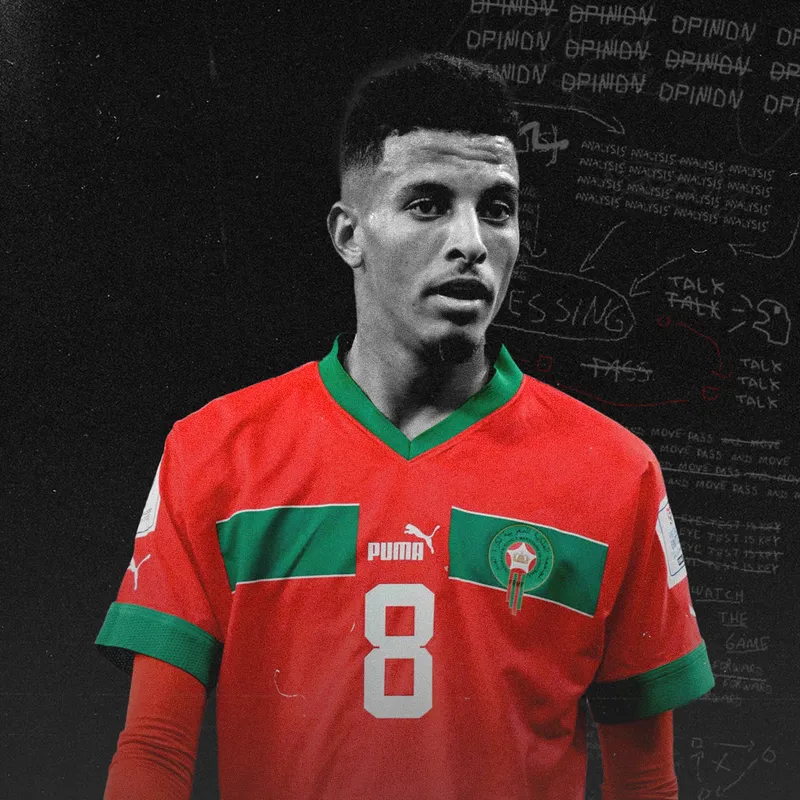
Illustrator Gabriel Foligno Publication DeFodi Images
Analyzing the Attacking Structures from AFCON 2025
The 2025 Africa Cup of Nations has been nothing short of absolute entertainment, with memorable moments already starting from day one. From Ayoub El Kaabi’s bicycle kick to Patson Daka’s backflip, to Mbekezeli Mbokazi hitting the crossbar…
The 2025 Africa Cup of Nations has been nothing short of absolute entertainment, with memorable moments already starting from day one. From Ayoub El Kaabi’s bicycle kick to Patson Daka’s backflip, to Mbekezeli Mbokazi hitting the crossbar with a shot that sounded like it destroyed the post from the halfway line, to Samuel Moutoussamy almost getting yellow-carded for refusing the stretcher, and many more. The exciting football has kept everyone on the edge of their seats, with only three matches, Zambia vs Mali, Ivory Coast vs Cameroon and Angola vs Egypt, ending in a draw.
However, for all the chaos, there has been a clear trend of teams looking to control their attacking structures and consistently generate chances from set positions. The one I’ve noticed the most has to be the 3-2-5 attacking shape. This structure gives you five attackers up front to stretch opposition backlines and keep them pinned back, two midfielders to help move the ball forward, create chances, shift possession across the pitch, and act as the first line of sweepers if the opposition tries to transition.
Lastly, it leaves three defenders at the back to provide defensive solidity and cover in case the first two lines are beaten. This works well as it provides width and usually outnumbers the opposition forwards 3v1 or 3v2, especially with bodies dropping deeper to support a low block.
How Morocco Shocked Portugal and Became the First African Team to Reach the World Cup Semifinals
Credits
Words
Sekwila Mumba