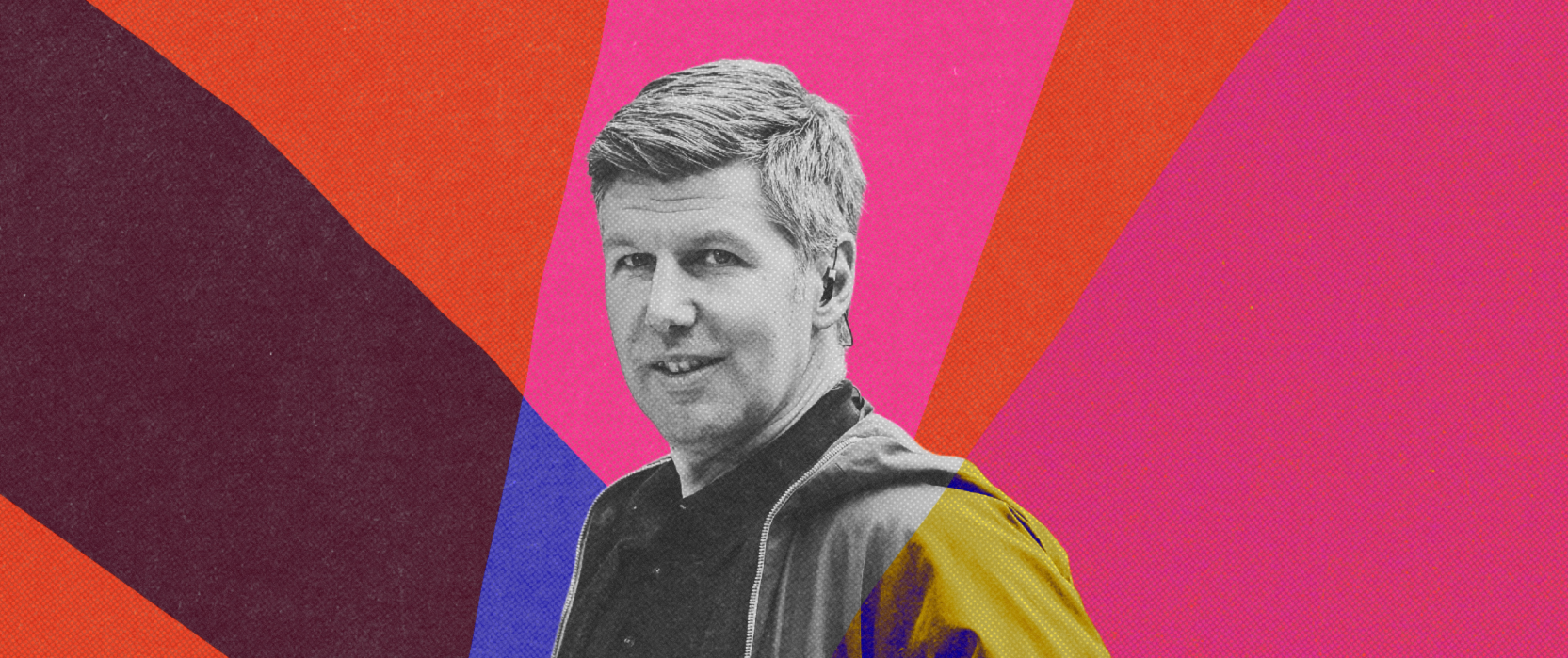
Thomas Hitzlsperger opens up to Breaking the Lines in an exclusive interview
He's conquered the Bundesliga, represented Germany on football's biggest stage, broken barriers for LGBTQ+ athletes, and swapped the dressing room for the boardroom — but Thomas Hitzlsperger is far from finished making his mark on football.
Born on April 5, 1982, in Munich, West Germany, Hitzlsperger started off with the VfB Forstinning youth team before joining Bayern Munich's academy, where he spent 11 years before departing in 2000. He decided to test his skills abroad, and after a brief trial with Celtic, he ended up joining Aston Villa. After a loan spell with second-tier Chesterfield FC, Hitzlsperger was recalled and emerged as a key figure for the Villans with 12 goals and 14 assists in 114 appearances.
He emerged as a fan favorite at the Holte End thanks to his potent left-footed strikes and his impressive positional awareness, earning the nickname 'Der Hammer.' He then returned to Germany in 2005, where he proved indispensable in VfB Stuttgart's midfield, scoring an equalizer in a comeback win vs. Energie Cottbus, which secured their first Bundesliga title in 15 years.
Hitzlsperger scored 30 goals and 21 assists in 172 appearances, wearing the captain's armband for over a year and helping Stuttgart reach the 2006/07 DFB-Pokal Final. He didn't just make his presence felt at the club level, but the international level, scoring 6 goals in 52 Germany caps and earning a bronze medal at the 2005 Confederations Cup and 2006 FIFA World Cup as well as a silver medal at the 2008 European Championship.
Similarly to other German midfielders like Diego Demme, Hitzlsperger tested his skills in Italian football but played just six times in six months at Lazio before heading back to England in June 2010. Hitzlsperger then spent the 2010/11 season at West Ham, scoring 3 goals and 6 assists in 13 appearances but nevertheless failing to keep them afloat in the Premier League, before heading to Wolfsburg and Everton for the final two seasons of his career.
Four months after hanging up his boots at 31, Hitzlsperger became the first high-profile male footballer to come out as gay. He's spent the past 12 years advocating for the LGBTQ+ community, which he further discussed in his 2024 autobiography Mutproben (Tests of Courage), as well as working as a commentator for leading sports outlets like Sky Deutschland, ESPN, Fox Sports, The Guardian, ARD, and the BBC.
Having served as Stuttgart's Sporting Director and then CEO from 2019 to 2022, he currently serves on the administrative board of Serie B side Hellas Verona, and he was also named a member of Aston Villa's Honorary Anniversary Board to help guide the club's high-profile 150th anniversary season in 2024. Furthermore, he controls a 51% stake in Danish second-tier club Aalborg BK via his sports investment group SSE22 -- which just added Eerste Divisie side VVV-Venlo to its network.
Hitzlsperger keeps a busier schedule than most, whether it's managing London's oldest French restaurant, L'Escargot, or working with his wide array of clubs in Italy, Denmark, and the Netherlands. However, he still found the time to sit down and speak to Breaking the Lines about a plethora of topics, including:
Germany are coming off a humiliating Round of 32 exit in the 2026 FIFA World Cup...how far away are they from closing the gap with the main footballing heavyweights like Spain, France, England, and Argentina?
The people that I know in Germany are looking around and thinking, 'What is missing? What do we need to get back to it? We've won the World Cup four times; why can't we win it again?' We can, but you have to see what it takes nowadays to be at the top, and I think we are not at the top right now, and that's why German football will evolve again.
We have to look at Spain and try to learn how to build a team and have a clear identity. But we have to stay true to our values and not just copy somebody, but know who we are and do this better than anybody else. Football always changes or evolves, and right now, Spain is the gold standard, and I did say before the World Cup that they would win it.
In terms of methodology and talent development, the Spanish get it right. They find the right mixture, and it's really impressive. They weren't on the scene 30 years ago, they didn't win anything, and now they're the dominant force in world football. Oftentimes, what it takes is the little details.
How Spain Silenced France: A Tactical Overview.
You always have an opportunity to come back and be the best: the Argentinians have their own style of trying to win things, the French have incredible talent, they have an incredible roster, but they still didn't win the World Cup. The French is the second team where I think they have to really go far, along with Spain. They're just too good to get knocked out early.
It's difficult to say how to close the gap because if you get to the semifinal, anything can happen. But to be that good that you're almost guaranteed to go to the semi-final, I think this is what it takes. Spain are the team where you think, 'They will go far unless something unexpected happens,' whereas with Germany and England, it's 'Yeah, they're good, they have some good players, and you can see them going far, but it's not really that definitive.
With all the money that's been poured into English football, England should win something, but something's missing with them. Whether they just feel that pressure of not having won anything since 1966, I don't know, but something's missing, and they should probably ask themselves more questions about why they keep failing to win a big trophy. Maybe in 2028, with home advantage, that will finally be the time.
Which underdog countries could you see making a deep run in Euro 2028?
Norway has done a great job, and we're now aware of it. I've been saying for years that Bodø/Glimt is the outstanding team for me. When you look at what they can achieve with limited resources...they must have some incredible people there with an amazing work ethic and a clear idea of what they want to be and what they want to achieve. To move up and challenge some of the biggest teams in European football in the Champions League and to beat them, that's where we have to look.
Everybody knows Bodø/Glimt, but also in Norwegian football in general, when you look at their first team, there are some fantastic players. Some people must have had a very good idea in the talent development area several years ago and executed it really well, so I think that the Norwegian team is worth looking at. Being from Germany, our neighbor is Austria; I think they went into the last two tournaments thinking, 'We can win something,' but they failed twice.
https://x.com/breakthelines/status/2108573782331768926?s=20
Norway is probably my bet. Portugal is a country that knows how to develop talent, and similarly to France, there's a lot of great talent, but something's missing for them in order to win. They won Euro 2016, and it's always worth going to Portugal to look at some of the clubs: How do they manage, in such a relatively small country with so few people, to still produce the amount of talent they do?
Hellas Verona are playing in the second tier for the first time in the post-COVID era, but they nevertheless have a date with Roma in the Coppa Italia coming up. What are your thoughts on their situation and what do you think they need to get back to the top?
I was at the cup game vs. Cagliari last month, and it was so much fun to go there, play a Serie A team in the Coppa Italia, and come back with a win. It was really fantastic. Of course, the main ambition this season is to get back into Serie A, but there are always limitations when you're operating. Obviously, the investor group that came in is trying to get an overview of what the club is all about and understand all the mechanics in Italian football; it takes time to really understand.
Every country operates differently in this football environment. You can't just say, 'Well, I've seen football, I know everything, move aside, I'll show you how it's being done.' You've got to come in here, listen to people, watch, observe, and then eventually change the things that you think are necessary. We didn't come in with that much money, and it was always clear to us that we were in this area where relegation was possible.
https://x.com/CBSSportsGolazo/status/2095618256673358130?s=20
We said, 'Okay, we must play for Europe,' but unfortunately, it didn't happen. But everything I know about the people who work for the club here, they're extremely passionate and they give their best every day. The focus is now on getting promoted. The summer transfer window's closed, and I think, looking at the team, there are some good players. Now it's about whether every single player understands what it takes to play Serie A.
We've just beaten a Serie A team, but then all the other games are coming, and there's a different way of playing in Serie B. Hopefully we can give the people here something to cheer about, because there weren't many wins in Serie A last season. I found it quite difficult to lose that often. I know that we're one of the smaller teams, and we're trying to overachieve, but losing games hurts, and this season, we will win more games.
Germany are doing well in just about every sport, in tennis, basketball, bobsleigh...so why do you think they're currently underperforming right now in football?
I wouldn't be so critical. It's true that we're doing incredibly well in basketball, we're doing okay in Formula 1, and we've got the year-end #1 in men's tennis in Sascha Zverev. I wasn't quite sure before the World Cup, I was a bit skeptical and thought, 'We're not that good,' but I believed that with a bit of luck, we'd reach the semifinal. It has to be said that the manager, Julian Nagelsmann, was inexperienced.
Nagelsmann has experience as a coach because he started his career early, but he only worked in club football. And as with most big footballing nations, when you're the coach of the national team, it takes more than just being a good football coach and getting your tactics right.
I think the job was too big for Nagelsmann. Not to say that he's not a good coach, but just the disposition, and what happened was the Euros two years before, when they left the Euros in good spirits. The fans and the team grew together again, which was good. It wasn't perfect, but it was an improvement to the tournaments before, so I think there was a bit of a misconception of how good the team actually is, and how well the coach and the team work together.
Paraguay's Defensive Masterclass: The Wall Germany Could Not Break
Nagelsmann wanted to be the Bundestrainer, but it was too much in the end. He tried his best, but some of the things that he dealt with in public and his communication let him down too many times. He was criticizing Deniz Undav on several occasions, where almost every single fan thought, 'What's this? This almost seems personal.' You can't criticize a player for just scoring a goal, which he did when Undav scored in a friendly against Ghana.
I think communication let him down on too many occasions, and more and more people thought, 'This is not right.' He didn't have the backing and support of probably all the people that he thought he should have. The good thing is that, after this World Cup, there was only going to be one solution: hiring the coach that everybody had wanted for such a long time. Jürgen Klopp must be the best solution of all, but you must understand that it's not an easy job for him, because some of these players are not the best talents. He has a big task ahead of him.
As traditional fan-owned models in Germany face financial pressure from multi-club models and private equity, how should clubs preserve their community heritage while staying competitive? Do you think that it's vital that German clubs uphold the 50+1 rule, or do you think that in the face of Bayern Munich's dominance, maybe they should change things around?
It's such a big topic in German football, and I think most people are actually quite happy. I agree that having the 50+1 rule is so unique for us, and it does prevent a lot of bad things from happening in football. Still, some clubs are badly run with 50+1, and they'd be badly run without it. Overall, I think it does give the fans more say at a time when more and more of the game is being sold, where it's purely about money. I'm in favor of 50+1.
I think this is just the last option for fans in German football to slow down the evolution of football, where it's purely about increasing prices, and everything's more and more expensive, and the stadiums are full of content creators and VIPs and all that sort of stuff. Of course, there are always various exceptions in German football, which I disagree with, but the fact that Bayern is so dominant is probably a combination of 50+1 and the amazing work they do.
https://x.com/RaeComm/status/1384313919141994498?s=20
The people in charge of Bayern are just incredibly good football people. They know exactly how it works, and I actually think if 50+1 didn't exist, it would give an opportunity to some other clubs to come closer to Bayern. But Bayern will always be the dominant force. They deserve it with the way they've worked over decades, and so be it. But maybe when Vincent Kompany leaves one day, and they don't find a good replacement, then the other teams will have more of a chance.
Last but not least, it's been nearly 13 years, and you are still the only male German professional footballer who has come out as gay. Do you think that football has improved in terms of accepting LGBTQ+ players, or are there still a lot of things that need to be addressed before we can say that progress has been made?
There are always a lot of issues that could and should be addressed in football. The debate around gay football players does exist, and I think there is space for it, especially from the fan side. Clubs understand the importance of diversity; they usually look at their fan base holistically and say, 'We've got different fan groups, they're all our fans, they support the team, they support the club,' but I think it's become more difficult for clubs to really decide what's important for them.
When you allow your players to speak up for their own cause, you can't control them anymore, because there are various things that your players will support on the political spectrum. Thankfully, I'm not aware of a single player in Germany who supports a right-wing party, but if a player suddenly spoke up in favor, what are you going to do? This is probably an extreme example, and I think I would know what clubs would do. But there are other areas where players have an opinion that's contrary to the club's opinion, and you think, 'Whew, this is very, very difficult.'
There are always people in football clubs who support the gay community, but I remember previous Rainbow Laces campaigns in the Premier League causing controversy, because you always have the odd player who just says, 'I'm not wearing the armband, I don't like this idea, I don't want them to force their views on me.' Religion, in this case, does play a role in the end, where certainly religious beliefs often don't allow same-sex marriage and all this sort of stuff.
It will still be very difficult and intense for everybody involved to find the balance between being neutral and promoting the game and talking about football, and on the other hand, understanding that you are bringing a lot of people together. You have a responsibility to be open and tolerant and diverse without upsetting too many people, and to make sure the values that matter to you are upheld, and when there is controversy and debate, to find a good outcome. I've worked for a club where sometimes you'd be surprised the things that come up. You think, 'Oh, God, what am I gonna do with this?' They're just simple examples, but it's tough.