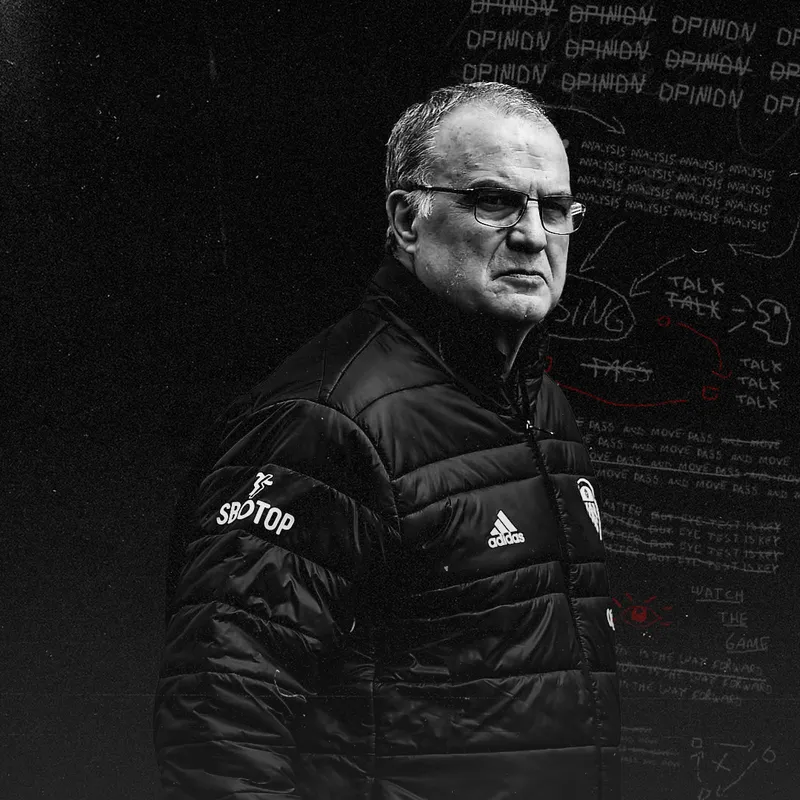
Uruguay: The Legacy of Garra Charrúa
From Brazil to Argentina, from England to Germany, from Italy to Spain to France, we’ve seen a handful of teams get their hands on the elusive FIFA World Cup trophy. However, the very first team to win a World Cup was Uruguay, who…
From Brazil to Argentina, from England to Germany, from Italy to Spain to France, we’ve seen a handful of teams get their hands on the elusive FIFA World Cup trophy. However, the very first team to win a World Cup was Uruguay, who dominated international football in the 1920’s, adding to their tally the first Olympic gold medals of 1924 and 1928, and winning the 1930 World Cup they hosted.
Over the past century, Uruguay has been a constant competitor in the World Cup, producing some of the most iconic moments of the tournament’s history. 20 years after winning the inaugural edition, La Celeste returned to the tournament and shocked the world by defeating Brazil on home soil. In doing so, they inflicted a traumatic loss that is also known as the Maracanazo, breaking the hearts of the many Brazilian fans that came to the stadium in the most crowded game in the history of the World Cup (173,850 people by official data, but estimated to be 200,000).
Four years later, Uruguay topped their group and thrashed England 4-2 in Basel before erasing an early two-goal deficit and levelling the scoring at 2-2 in the World Cup semifinal. However, Hungary’s Mighty Magyars would have the last laugh after prevailing 4-2 in extra time, before losing to Austria in the third-placed match. After a disappointing group stage exit in 1962, Uruguay would advance to the knockout round in 1966, only to lose 4-0 against West Germany.
/@btl/federico-valverde-real-madrids-uruguayan-machine-in-midfield
Another deep run followed in 1970, with La Celeste narrowly edging the Soviet Union in extra time before losing to eventual champions Brazil in the semifinal. They finished bottom of their group in 1974 before going through a dry spell, only returning in 1986, where they lost to eventual winners Argentina in the Round of 16. After losing to hosts Italy in the Round of 16 of the 1990 edition, Uruguay would go 12 years without a participation before pulling together two points from three games and going out in the groups.
They returned in 2010, finishing ahead of Mexico, France, and hosts South Africa, before edging South Korea 2-1 via Luis Suárez’s brace. Just when it seemed that they were about to lose at the final second vs. Ghana, Suárez used his hands to block Dominic Adiyiah’s shot at the goal line, resulting in his expulsion. Asamoah Gyan stepped up to the spot and squandered the spot-kick, with Uruguay prevailing on penalties and advancing to the semifinal, where they lost to the Netherlands.
Uruguay then edged former champions Italy and England to the final knockout round spot in 2014, only to lose to Colombia in the Round of 16 following Suárez’s banishment after ‘El Pistolero’ nibbled Giorgio Chiellini’s shoulder in the final group stage match. They did marginally better in 2018, finishing atop their group and edging Portugal in the Round of 16, before losing to eventual champions France. And in 2022, Uruguay drew against South Korea and lost to Portugal before beating Ghana, a win that failed to secure their ticket for the knockout round.
The elementary question that must be asked about Uruguay’s success is how. How a country that is consisted of 3 million people manages to punch over it weight and be so successful both internationally (two World Cups and two gold Olympic medals) and locally (15 Copa América titles, second-most only to Argentina), with such limited resources and human capital, being able to produce high level players almost always and even the current captains of the biggest clubs in the world, Federico Valverde (Real Madrid) and Ronald Araújo (FC Barcelona).
/@btl/rodrigo-zalazar-bragas-uruguayan-recruit
The answer to that is made of several things. First of all, football is deeply rooted in Uruguay’s culture, and the most notable example of that connection is the “baby fútbol”, a term that describes the Uruguayan football ecosystem. “Baby football” refers to organized football for young children, typically ages 5 to 13. It’s structured into neighborhood clubs and local leagues, with regular training sessions and competitive matches. These teams are tied to local neighborhoods and local communities, and it's almost always volunteer-driven.
In turn, this cultural phenomenon helps the youth in early talent development and scouting exposure, which later on develops into professional careers (like in the cases of Diego Forlán, Edinson Cavani, and Luis Suárez). But the main reason for the emphasis and support on “Baby Football” is the social and cultural aspects. Such programs help young boys and girls develop a sense of community, values such as discipline and teamwork, and social life. Since games are usually attended by huge crowds and a lot of attention is devoted to them, it is almost like the College tournaments in the USA for basketball and American football.
Secondly, Uruguayan football is based on the philosophy of “Garra Charrúa”, which is translated to the claw of the Charrua, the indigenous people who lived mainly in the area of today’s Uruguay and its borders with Brazil and Argentina. One of the nicknames of Uruguay’s football national team is “Los Charrúa”, and the reason for the significance that Uruguayans attribute so much to the Charrúa is because of their history.
The Charrúa people lived in Uruguay until the appearance of the Spanish Conquistadores. Yet despite all odds, they managed to put up a glorious fight and resisted the conquerors until 1832, a year in which they were betrayed by the president, General Fructuoso Rivera, who led the massacre of the Charrúa.
/@btl/ronald-araujo-barcelonas-uruguayan-colossus-in-defense
The spirit, resistance, and faith to fight to the last breadth displayed by the indigenous Charrúa in their fight against all odds, shaped a social mental philosophy in Uruguay that can be seen everywhere, and especially in the national team, that implemented it to the players from their first moment wearing the national team’s shirt. Every player must be willing to fight for the flag and die on the field for the shirt by never giving up.
That mentality creates fear amongst opponents, knowing that the only way to beat Uruguay is to be better than them for as long as possible. But if you think that only mental philosophy and youth development can lead to success, you will fool yourself, since Uruguay’s style of football is one of the rarest in the world, and it is very hard to duplicate. Uruguay put a lot of emphasis on defensive solidity and builds very strong physical players in the center defense, such as Diego Godín in the past, but also Ronald Araújo and José María Giménez, who are modern examples.
The midfield follows a similar path and usually will consist of strong but fast-paced midfielders who can tackle, shoot from far, and control the ball, with the likes of Maximiliano Araújo, Nicolás de la Cruz, Manuel Ugarte and Federico Valverde. The front end is where you usually find the cherry at the top of Uruguay, since strikers are their spécialité, producing legendary players such as Edinson Cavani, Luiz Suárez and Diego Forlán.
At the current World Cup, the attacking part of the field will be controlled by Facundo Pellistri, Brian Rodríguez, and the former Liverpool and Benfica star, Darwin Nuñéz, all of whom are looking to have a strong impact on the team, and look to extend the striker's legacy and maybe, with a deep Uruguayan run in the tournament, secure a transfer back to European football. First, though, they'll have to get past Cape Verde, Spain and Saudi Arabia.
All the stars might align for Uruguay With an experienced and talented core squad that has trained together for several years, with a crazy, uncompromising genius coach, Marcelo Bielsa, who is known for his ability to create surprises and is a great motivator, perfectly fit the “Garra Charrúa”, might all lead to another iconic chapter in Uruguay’s pride, football. Now, can Uruguay return to the biggest stage in world football for the first time since 1950?
By: Ronen Bangiev
Credits
Words
Ronen Bangiev