The Death of the World Cup Breakout Star
When I was 8 years old, I believed that Senegalese forward El Hadji Diouf was one of the greatest professional soccer players of the 21st century. I had arrived at this opinion while sitting on the floor of my family's TV room in Upstate…
When I was 8 years old, I believed that Senegalese forward El Hadji Diouf was one of the greatest professional soccer players of the 21st century. I had arrived at this opinion while sitting on the floor of my family's TV room in Upstate New York, having just watched “The Official Review of the 2002 FIFA World Cup,” a video compilation of the goals and highlights of every match at the tournament.
Diouf, I had concluded, was an unstoppable force. Who could this virtuoso be, this wing wizard whom I had just witnessed rendering himself such a sharp thorn in the side of the French, who I'd witnessed making traffic cones out of an entire Swedish backline, but a defining player of his generation?
Evidently, I was not the only one who held these beliefs. After Diouf's man-of-the-match performance against France in the tournament's opening game, Liverpool FC parted ways with around 10 million British Pounds in exchange for the forward (a huge outlay at the time). Gerard Houllier, the Reds’ manager at the time, even speculated that Diouf was the missing piece that would bring a fledgling Premier League title to Merseyside.
It should be noted that Diouf was not an entirely unknown quantity before the 2002 World Cup; he was coming off the back of a prestigious African Player of the Year award in 2001, and a couple of impressive seasons with Lens in France. But the World Cup is undoubtedly what put the world on notice, what got the wheels turning for the managers and recruiters of European giants. He broke out at the big one.
/@btl/gerard-houlliers-apotheosis-in-famous-anfield-european-night-against-roma
But as it turned out, everyone was wrong. What followed the big-money move was 3 goals and 55 games in 2 years with Liverpool, 21 goals in over 100 games at Bolton Wanderers, and disappointing spells at both Sunderland and Blackburn. In fact, Diouf’s career in England was perhaps most notable for three (three!) separate spitting incidents, among other disciplinary aberrations. What on Earth had happened?
In fact, Diouf belongs to a special category of players: World Cup breakouts, who explode onto the scene beneath the bright lights, whip everyone into a frenzy, and then begin the long walk atop the terrifying tightrope that bisects immortality and irrelevancy.
It is an exclusive, spine-tingling, magical club – there is endless excitement to be found in these players who seem to have been zapped into existence by bolts of lightning, who may have the world at their feet for years to come, or perhaps mere months. The joy of football derives from its unpredictability, and these players are exactly that: kernels ready to pop in a direction only known by the future.
A baseline point must be established before this examination of World Cup breakouts commences: the idea of a “breakout” is one tinged with Eurocentrism. Who is to say a player has not “broken out” when they are starring for a club in their home nation, wherever that may be? The phenomenon’s existence assumes that the absolute inarguable pinnacle of football exists on a solitary continent. And for most of the 20th century, that was not even arguably the case.
/@btl/newcomers-and-second-appearances-what-to-expect-in-the-2026-world-cup
But in the 1990s, something began to shift: in short, European clubs began receiving a lot more money than their counterparts in Asia, Africa, and the Americas. The advent of the Champions League and Premier League in 1992 brought about commercial deals of unfathomable size, leading to a massive wealth disparity in the footballing world.
European clubs now had the wealth to lure players from across the globe into their clutches, and they had the incentive: the Bosman ruling of 1995 severely diminished domestic limitations on foreign player quotas and allowed for free movement of footballers within the EU. Teams in Europe have never looked back from this initial financial windfall; to this day, their collections of cash dwarf those of teams overseas, with very few exceptions.
Even within the continent, cavernous gaps exist between the “big teams” and those with less monetary might. This, in my opinion, is very, very bad. But that’s another story. In essence, as European football gained unprecedented wealth, and the world grew ever more interconnected through developments such as (but not limited to) the internet, the World Cup became a premier scouting tool for clubs in England, Italy, and Spain, and elsewhere to find hidden titans plying their trade for “smaller” clubs both inside and outside of the EU.
How, then, can a “breakout” be defined in this context? The bottom line is that these are players who were relatively unknown outside of one (or a select few nations) before a World Cup, who then propelled themselves to stardom at the tournament itself, leading (more often than not) into a move to a “larger” club following their return from international duties.
/@btl/south-america-the-place-of-the-dark-horses-for-the-2026-world-cup
While the phenomenon would not reach its apex until near the turn of the century, it existed long before then. In 1982, Honduras’ Hector Zelaya, a 23-year-old defensive midfielder, signed for Deportivo La Coruna after an impressive tournament in which he scored against hosts Spain en route to a shock 1-1 draw. Injuries would decimate his career, forcing him to retire within a season of his moment in the sun.
Eight years later, Costa Rica went on a surprising run to the round of sixteen of the big one with a squad full of entirely domestic-based players. Immediately following the tournament, five members of their roster were snapped up by teams across the Atlantic; all of them were back in their home nation within four years. Egypt’s central defender Hany Ramzy, who also starred at the 1990 World Cup, was a far greater success; he signed for Swiss side Xamax after three stellar group stage games, and would not leave Europe until he retired in 2006.
In 1994, things began to open up. The Bosman rule was not in place yet, but with more cash to sit on, teams grew less reticent nonetheless. Players like Ilie Dumitrescu, Philippe Albert, Emmanuel Amunike, and Marc-Vivien Foe all kick-started respectful careers in the big leagues thanks to displays at the World Cup. The United States was particularly impacted: Major League Soccer would eventually have its first season in 1996, but the 12 years prior represented something of a professional top division drought in America.
This meant that a huge portion of the US squad had never played paid ball prior to the 1994 World Cup, and many of them impressed that summer. Among this group were future Premier League regulars Joe-Max Moore, Claudio Reyna, and Brad Friedel (who would eventually break the record for most consecutive Premier League appearances, with 310). Perhaps the most striking of the bunch, though, was the fire-haired and goateed Alexi Lalas, whose aerial prowess landed him a move to Italian side Padova.
/@btl/italys-missing-the-world-cup-is-the-fault-of-modern-football
After a couple of seasons of just-okay performances, Lalas’s new club realized, well… he wasn’t actually that great. Aside from a brief spell in Ecuador, Lalas would spend his last seven on-field years in the MLS, where he established himself as something of a domestic all-star. A respectable career, but maybe not the breakout stud many believed him to be when they first saw him strutting his stuff on the world’s stage.
By 1998, a variety of factors had coalesced into something of a perfect storm. European clubs were beginning to really reap the benefits of their prior commercial deals and were throwing money about willy-nilly. Simultaneously, the World Cup had expanded to 32 teams, and there were more players for scouts and recruiters to ogle than ever.
Of course, the internet had rendered the world a far more interconnected place, but by this time, most clubs still had fairly rudimentary scouting apparatuses in place; therefore, many players at the tournament would have been previously watched by only the most dorky of football fanatics. This was the perfect opportunity for guys angling for big moves to put themselves front and center in the shop window.
And many took the opportunity. Japan’s Hidetoshi Nakata thrilled many with his work rate and attacking intent in spite of his nation’s group stage exit, earning himself a move to Perugia in Italy (a nation where he would thrice be nominated for the Ballon d’Or). Dejan Stankovic’s technical wizardry and general exploits with Yugoslavia attracted the services of Lazio; the midfielder would spend six years there before moving to Inter Milan, where he would win a Champions League title.
/@btl/morocco-a-long-term-dynasty-or-a-one-hit-wonder
Equally impressive that summer was Chile’s hard-as-nails central defender Javier Margas, who ended up signing a deal with Harry Redknapp’s West Ham for the coming season. Margas’s post-1998 career was less impressive; he would tally only 24 league appearances over the course of the next three years before retiring in 2001.
Even mere moments of genius were at times enough to convince teams to snap up someone’s services. Take Cameroonian fullback Pierre Njanka: all things considered, Njanka had a pretty mediocre-to-bad tournament, as the Indomitable Lions crashed out after three games and two points only.
Njanka also scored one of the most underrated goals in World Cup history in his side’s opening game against Austria, picking up the ball in his own half before jinking past half of the opposition defense and drilling the ball into the top-right corner of the net. Forget the rest of it: that was all Swiss club Neuchatel Xamax needed to see. They’d sign Njanka a mere week removed from Cameroon’s elimination, before selling the defender on to Strasbourg in France a year later.
For the next three editions of the World Cup, affairs proceeded in essentially this fashion. Guy goes to the World Cup as a relative unknown, leaves as a household name, makes a big move for better (Gilberto Silva, Mesut Ozil), for worse (Salif Diao, Kleberson), or for… meh (Asamoah Gyan, Fabio Grosso). Between 1998 and 2010, there were at least 15 under-30 players per World Cup who would move to Europe from overseas immediately following each tournament.
/@btl/mexico-and-the-quinto-partido-curse
And this figure doesn’t even take into account the countless players during that era who made the move from “smaller” European leagues to “bigger” ones, or the players who were signed one or two windows removed from a World Cup after originally putting themselves on the map during the international festival of football. Indeed, the big one had cemented itself as a premier hotspot for unearthing the unknown.
And then… something happened. The aforementioned number dropped to nine at the 2014 World Cup, then to seven in 2018, and then down to a lowly four in 2022. Today, it seems as though the idea of a World Cup breakout is petering out into extinction. What on Earth could have made this the case?
Simply put, club teams are getting smarter. Kind of. At the very least, their talent identification teams are getting larger. From the Premier League to the Hungarian top flight, from the Brazilian second division to the A-League in Australia, everyone and their mother has access to troves of advanced data from disparate corners of the globe.
There are statistical models, expected goal heuristics, dorks and nerds, and boardrooms alike that all play a part in player recruitment, all of whom could draw up the most detailed of dossiers on any average joe playing professional ball anywhere in almost no time. All in all, scouting departments are completely unrecognizable from what they were even 15 years ago. There’s just more information, and more people to vet that information.
/@btl/julian-hall-and-the-death-of-the-raw-american-prospect
So what does this mean? Well, firstly, there are very few “surprises” on any given World Cup roster. Take (basically) anyone selected for the 2026 World Cup, and even I, with no professional scouting tools at my disposal, could just fire up a search browser, look up their name on one of many active open-access statistics websites, and instantly see their exact passing efficiency numbers, expected goals statistics, aerial duels won per game, anything.
Want to get a little more intimate? It’s just as easy, of course, to look up player highlights or footage of full matches. With this in mind, clubs are now often aware of talented footballers well before they have even dreamt of making it to a World Cup. And they’re not just sitting on this information, either; an ever-growing number of players are making big-money moves into the academies or first teams of mammoth clubs as soon as they are allowed to do so.
Broadly, there has been a shift towards utmost transience in the talent identification process across the board. Of course, there have been players in recent years who could still reasonably qualify as “breakouts.” Take Benjamin Pavard in 2018, Enzo Fernandez in 2022. But while these footballers may have caused the public eye’s collective eyebrow to raise, the overall effect is not really the same in terms of its comprehensiveness.
Many a footy addict knew how good Pavard and Fernandez were before the tournament, and they still knew how good he was afterwards. Mystique no more. Another reason for the disappearance of the breakout: in this age of “efficiency,” where clubs are willing to go to basically any length (including laying off beloved staff en masse) in order to achieve “maximum productivity,” there is simply too much risk involved with spending money on someone based on a mere handful of games.
/@btl/television-vs-terraces-online-fandom-and-matchday-supporters
Even if someone were to appear after slipping through the cracks of spreadsheets and other schemata, recruiters would need to see more than just a few golden moments. To make things clear, I have no real problem with football’s widespread usage of advanced data and statistics in a vacuum. And there are some positive spins on the disappearance of World Cup breakouts themselves: the acquisition of football knowledge for the masses has indeed never been easier.
But there is something sad about a certain veneer of wonder being slowly peeled away, this avenue of surprise being blocked off. With this long goodbye, we lose a few terrific jumps of the heart. By my own estimation, the most recent approximation of a true-blue World Cup breakout player occurred in 2014. That year, Costa Rica was one of the tournament’s most unfancied teams; placed in a group with England, Italy, and Uruguay (three previous world champions), they were expected to fold, collapse, die.
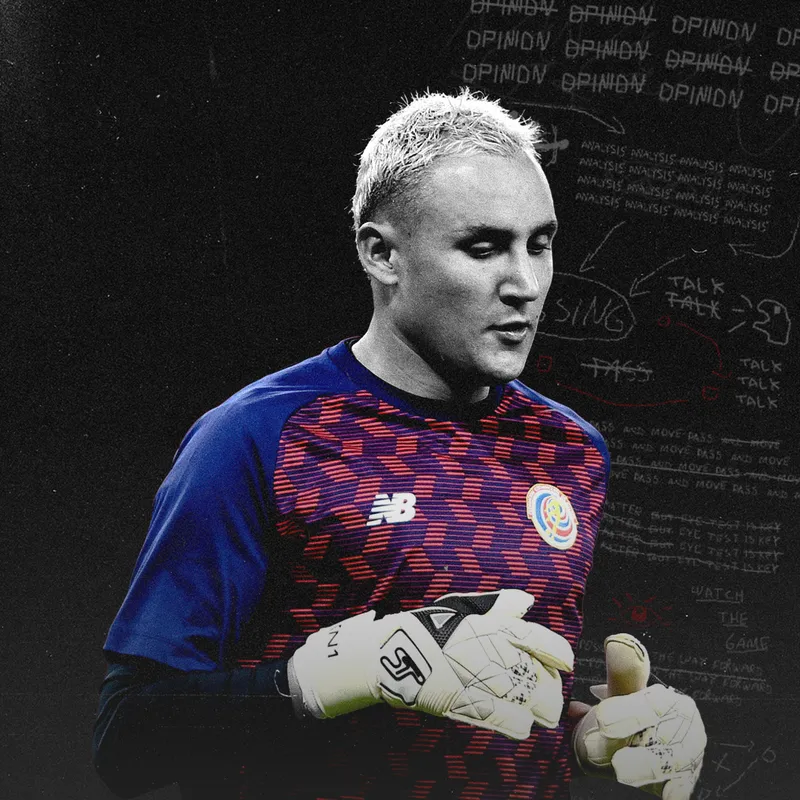
Instead, they made it all the way to the quarterfinals, kicking and screaming, the furthest a CONCACAF nation had made it in the World Cup for 28 years. Their star? Keylor Navas, an absolute monster between the sticks, who only conceded two open-play goals in five games, wowed the world with a string of miraculous saves.
Even here, there are some qualifications: Navas was coming off a fantastic year with Levante, in which he made more saves than any other goalkeeper in La Liga. But still, this alone probably wouldn’t have whetted the appetite for a European giant like… oh… I don’t know… Real Madrid. With his summer performances in mind, though, the Galacticos were indeed interested, and they forked over ten million euros for his services in early August of 2014.
/@btl/how-daniel-farke-saved-leeds-uniteds-season
What followed was a glittering career in the Spanish capital: he won three consecutive Champions Leagues as Real Madrid’s starting goalkeeper, as well as one La Liga title. After signing for French giants PSG in 2019, he then won 10 more trophies over the course of the next half-decade. Today, he is seen as arguably Costa Rica’s greatest ever player.
It is perhaps fitting that the final World Cup breakout was a smashing success. It is an ode to a game that we love for not knowing what comes next, for waiting anxiously to see what waits just around the corner. Regardless of football’s ever-changing state, this will always, beautifully, be true.
Credits
Words
Max Newman